
|
Getting your Trinity Audio player ready...
|
The Family
Barack Obama, Ann Dunham, and the grandparents who stayed
The Story
A boy raised without his father. A man who spent decades trying to understand why. A father who decided his daughters would never have that question.
The Cycle
Absent father. Identity confusion. A wound carried quietly into adulthood.
The Break
Malia and Sasha Obama grew up with a father who showed up. Every day. In the hardest job in the world. Without excuses.
Barack Obama was two years old when his father left.
Not dramatically. Not with a fight or a goodbye that the young boy could later point to and make sense of. Barack Obama Sr. simply went to Harvard to study, and then went back to Kenya, and then the letters slowed, and then there was mostly silence. And a little boy in Hawaii grew up with a father who was more idea than person. More story than presence.
That is a specific kind of hurt. Not the sharp kind that announces itself. The quiet kind that follows you around, the kind that shows up when you are trying to figure out who you are and realise you are missing half the information.
Barack Obama spent most of his early life trying to make peace with that. He wrote a whole book about it. And then he became the father he never had. That is the cycle breaker story.
“A cycle breaker is not someone who had a perfect childhood. A cycle breaker is someone who looked honestly at what they received, felt the weight of it, and decided their children would carry something different.“

Every child walking that road alone is building something. Sometimes resilience. Sometimes questions. Sometimes both.
The Father Who Was More Myth Than Man
Barack Obama Sr. was brilliant. People who knew him said he could walk into a room and hold everyone’s attention without trying. He was curious, passionate about his country’s future, and full of big ideas about what Kenya could become.
He was also someone who left. Twice, actually. He left Ann Dunham and his young son for Harvard. Then he left Harvard and went back to Kenya. And Barack, the boy in Hawaii, had to build a picture of his father from second-hand stories and the occasional letter.
He saw his father once. One visit. December 1971. Barack was ten years old. Obama Sr. came to Hawaii for a month, recovering from a serious car accident. The visit was tense at times. Barack Sr. tried to be a parent to a child he barely knew, and the gap between them was too wide to cross in four weeks. Then he left again.
Three years later, Obama Sr. died in a car accident in Kenya. He was 46. Barack was 21. And the conversations they had never had, the ones that might have answered the questions the boy had been carrying, never happened.
Later in life, Barack Obama said something about his father that a lot of cycle breakers will understand immediately. He said the distance may have actually helped him. His father was struggling, he explained. It created chaos and damage for the people who were close to him. Barack did not have to live inside that. Which is a painful and generous thing to say about someone who hurt you by not being there.
The People Who Stayed
While Barack Obama Sr. was a ghost, three other people were very much present.
His mother, Ann Dunham, was one of the most quietly remarkable people in this story. She was 18 when Barack was born. She was curious, adventurous, and deeply committed to her son understanding the world in all its complexity. She took him to Indonesia when she remarried. She sent him back to Hawaii when she felt the schools were better there. She later returned herself. She talked to him. She challenged him. She believed in him before there was any evidence he would become the person he became.
His grandparents, Stanley and Madelyn Dunham, took over when Ann went back to Indonesia for her fieldwork. They were ordinary Kansas people in the best possible sense. They were stable. They showed up. Every day. Madelyn worked her way up at a bank. Stanley coached Barack’s basketball and tried, with varying success, to understand his grandson’s growing sense of racial identity.
None of them were perfect. But they were there. And being there, consistently and without drama, is more than many children get.
Barack Obama said of his mother later in life that her values, her way of seeing the world, her belief that every person deserved dignity, were the foundation of everything he became. She gave him that while raising him mostly alone. That is worth sitting with.
Research consistently shows that children raised with at least one consistent, emotionally engaged adult, regardless of family structure, develop stronger resilience and identity than children without any such anchor.
Emmy Werner, longitudinal resilience research, University of California Davis, American Psychological AssociationThe Book He Had to Write Before He Could Move Forward
Dreams from My Father came out in 1995. Barack Obama was 34. He was not yet a senator. Not yet a president. Just a man who needed to understand where he came from before he could figure out where he was going.
The book is honest in a way that is unusual for someone in public life. He writes about the confusion of growing up mixed-race in America without a Black father present to help him understand what that meant. He writes about the stories he built around his absent father, the heroic version he needed to believe in as a child, and the more complicated real version he eventually had to accept.
He travelled to Kenya to meet his father’s family. His half-sister Auma had already come to visit him and told him the truth about their father. That he had struggled. That he had made people around him unhappy. That the brilliant charismatic man from the stories was also a person with real flaws and real failures.
Barack had to hold all of that at the same time. The father he wished he had, the father who actually existed, and the decision about what to do with both of those things going forward.
That is the work every cycle breaker has to do at some point. You have to look at the real story, not the version you needed to believe, and make peace with it. Not to excuse it. Not to pretend it did not hurt. But to stop letting the unexamined version of it run your life.
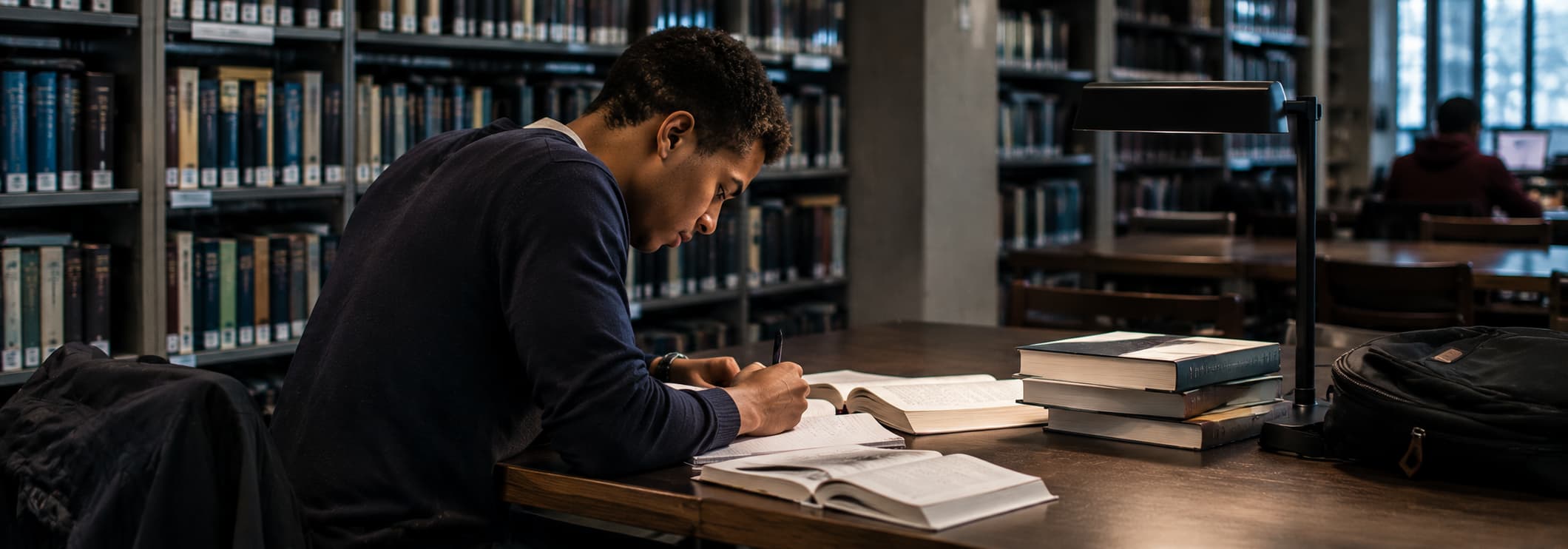
The work of breaking a cycle often happens quietly, in the spaces where a person sits with their own history and decides what to do with it.
What He Became as a Father
Malia Obama was born in 1998. Sasha in 2001. Barack Obama became a father at 37, after years of sitting with the absence of his own.
What he became for his daughters is not hard to see. He talked about them constantly. Not in the polished way politicians talk about their families during campaigns. In the specific, slightly embarrassing, clearly genuine way that fathers talk about people they are fascinated by.
He described Malia as buoyant. Someone who enjoys people, enjoys life, is never bored. He described Sasha as more like a cat. Independent. Not coming to you. You go to her. Michelle once said that Barack would come out of meetings and say he had just had an amazing conversation with Malia, and Michelle’s response was a dry “okay” because Sasha was harder for him to reach and he was still figuring it out.
That is a real detail. A good father trying to understand a child who does not make it easy. That is not a movie version of parenting. That is Tuesday evening at home with a kid who has her own personality and does not adjust it for you, even if you are the President of the United States.
After his second inauguration, Sasha, who was eleven, watched her father take the oath and then gave him a hug and said: “Good job, Dad. You didn’t mess up.” That is the verdict of a child who is not performing love. That is a kid who is comfortable enough with her father to be real with him.
He has described being their father as the most fulfilling job he has ever had. Not a throwaway line. He has said it in different ways, in different contexts, over many years. When he left the White House in 2017 he cried publicly saying goodbye to his staff. His daughters watched him cry. They did not look embarrassed. They looked like children who have seen their father be a full human being and are comfortable with it.
“Any fool can have a child. That doesn’t make you a father. It’s the courage to raise a child that makes you a father.”
Barack Obama, HuffPost
What This Story Teaches Every Cycle Breaker
The Lessons Worth Carrying
You do not need a blueprint to build something good. Barack Obama did not have a father present to show him what daily fatherhood looks like. He had to figure it out. He read. He reflected. He made mistakes. He kept going. The absence of a model is painful but it is not a life sentence. You can learn what you were not taught.
Doing the inner work is not optional. Obama did not just skip from a difficult childhood to a healthy family. He wrote a book. He travelled to Kenya. He sat with the real story of his father, not the comfortable version, and processed it honestly. Cycle breakers who skip this step often find the old patterns showing up in their parenting anyway, wearing new clothes.
The people who stay matter as much as the ones who leave. Ann Dunham stayed. Stanley and Madelyn Dunham stayed. They were not famous. They were not powerful. They just showed up consistently over many years. Barack Obama is who he is partly because of who was absent, and equally because of who was present. The people who stayed built the foundation. Do not underestimate what your consistent presence is building in your own child right now.
Your children do not need a perfect version of you. Sasha was hard for Barack to reach. He said so. Michelle confirmed it. He kept trying anyway. He did not get it perfectly right. He kept showing up. That is the whole thing. Your child does not need you to be flawless. They need you to be present, honest, and willing to keep learning how to reach them even when they make it difficult.
Breaking the cycle is quiet work. Barack Obama did not break the cycle by giving a speech about it, though he gave many good ones. He broke it by coming home. By having conversations with his daughters at the end of long days. By crying in front of them and letting them see it was okay. By showing up for the small moments when nobody was watching and it did not count for anything except the relationship itself.
A Note for the Cycle Breakers Reading This
If you grew up without a consistent father, or with one who was present in the wrong ways, you already know what Barack Obama was carrying. The specific weight of it. The particular questions it creates about your own worth and your own capacity to do better.
This story is not here to tell you that breaking the cycle is easy. It is not. It requires you to look honestly at what you received, feel the sadness of it without getting stuck there, and make a different set of decisions every single day.
But it is possible. Barack Obama is not a superhero. He is a person who grew up with a wound and decided the wound would not define what he built. He is a person who chose, consistently and deliberately, to be present for his children in a way nobody was fully present for him.
That choice is available to every parent reading this. Right now. Today. Not after you have done all the inner work or read all the right books or figured everything out. Starting now, with whatever you have, in whatever shape you are in.
Your children are not waiting for a perfect version of you. They are waiting for the real one.
For more on what it means to parent intentionally after a difficult childhood, read our post on why good fathers lose connection with their children and the patterns worth noticing before they become permanent. And for further reading on resilience and parenting, the American Psychological Association has strong resources worth exploring.
What is one thing your father did, or did not do, that you have already decided your children will experience differently? You do not have to have it all figured out. Just that one thing. That decision, made and kept, is where the cycle breaks.
Frequently Asked Questions About Barack Obama and Breaking the Cycle
How did Barack Obama’s absent father affect him?
Barack Obama Sr. left when Barack was two and the two only met once, for one month, when Barack was ten. The absence created identity confusion and a search for belonging that Obama wrote about honestly in his memoir Dreams from My Father. He later said the distance may have protected him in some ways, since his father caused significant difficulty for those close to him. But the absence still shaped him deeply and required real inner work to come to terms with.
How did Barack Obama break the cycle with his own daughters?
By showing up consistently and being genuinely present in ways his own father was not. He talked about Malia and Sasha in specific, personal ways that showed real knowledge of who they were as individuals. He adapted to each daughter’s personality, kept trying even when one was harder to reach, and modelled emotional honesty by crying publicly when he left office while his daughters watched. He described being their father as the most fulfilling job he has ever had.
What is a cycle breaker in parenting?
A cycle breaker is a parent who grew up with patterns of hurt, absence, harshness or disconnection and made a conscious decision not to pass those same patterns to their own children. It requires looking honestly at what you received, doing the inner work to process it, and making different daily choices even when the old patterns feel familiar and the new ones feel uncertain. It is not about being perfect. It is about being deliberate.
Can you be a good parent if you had a bad childhood?
Yes. Research consistently shows that the strongest predictor of whether a parent repeats harmful patterns is not what happened to them but whether they have done honest reflective work about what happened to them. Parents who have examined their own history clearly and made peace with it, not excused it but genuinely processed it, are significantly more likely to parent differently from how they were raised. The work is hard and it is worth doing.
Who raised Barack Obama and how did they shape him?
Barack Obama was raised primarily by his mother Ann Dunham and his maternal grandparents Stanley and Madelyn Dunham. Ann shaped his values, his worldview and his belief in human dignity. His grandparents provided stability, consistency and everyday love across years of ordinary life. Obama has credited his mother specifically as the foundation of everything he became. Their consistent presence in his life demonstrates what research also confirms: one steady loving adult is enough to change the trajectory of a child’s life.
You are already doing the work. Here are some tools to help.
Download the free Family Journey Starter Pack. Four resources including a 7-day challenge, a reflection workbook, a conversation guide and the main habit guide. Yours free, no catch.
Get the Free Starter PackFamily Journey Online, Helping Families Stay Close, On Purpose
www.familyjourneyonline.com
