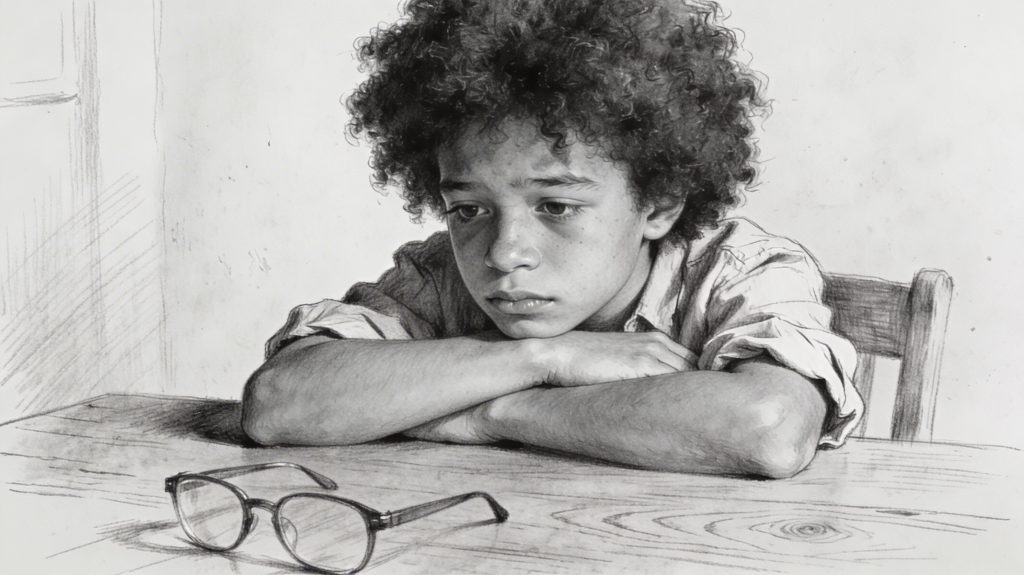
Before you contact your newly or recently estranged adult child, you need to pause. Your first message is not mainly about finding the right words. It is about what those words communicate to someone who chose distance from the relationship as it was.
By Nosakhare Osawe · Published October 12, 2026

Image: Family Journey Online
Key Takeaways
- Reaching out is not compulsory. In the early weeks, waiting, reflecting, and getting support is often more respectful than making contact.
- Estrangement changes the relationship. Your first contact signals whether you are offering the old relationship again or a different one.
- Separate what you know from what you assume. Many first messages fail because they answer a story the parent filled in, not what the child actually said.
Read this before considering contact: If there is a protective order, an active legal dispute, a safety concern, abuse, violence, stalking, coercion, or a serious mental-health crisis, do not make contact in any form, directly or through another person. Seek professional advice instead.
If your adult child has asked for no contact or blocked you, do not work around it with a new app, a new number, a gift, or a quick message through someone else. A no-contact request deserves time and respect. This article provides general relationship guidance, not legal or clinical advice.
When your adult child goes no contact, the urge to do something can feel overwhelming.
A considerate and healthy parent wants to understand the situation. You want to explain, if necessary. You want to correct what you believe was misunderstood. You want to ask what happened, tell them you love them, or simply hear their voice again.
Those urges are human. They are not, by themselves, a reason to reach out.
I know how quickly a few words can be misread when a relationship is already strained, because I have been on the receiving end.
When one word becomes the whole story
For about eight months, I did not reply to my father.
It was not because I had stopped caring. It was because I had no words that would not be counted against me.
During those months, he kept sending me one broadcast message and AI video after another. They carried suggestions and assumptions that were not true. They reflected his beliefs, not necessarily the reality on the ground, because there had never been a safe space for us to discuss the real issues. They often arrived at moments when I had nothing left to give, a young man raising a family in a country far from home, with very little support around us.
If I answered those messages the way I felt they deserved to be answered, it would be counted as talking back. If I ignored them, that was disrespectful too. As far as he was concerned, I was guilty either way.
I did not want to block my father. So I sent him a Bible verse, the one that tells fathers not to provoke their children to anger. Just the verse. No words of my own.
He replied with verses of his own, doubling down.
That message reached me as I walked out of the hospital theatre. Our baby had just been born and needed further medical care.
I wrote back three words: I am tired.
I was. Tired of the energy in those messages. Tired of the role they were playing in one of the most fragile moments of our lives. I was not tired of him.
But he read it as being about himself. His reply said, in effect, that I was tired of him, that if I did not need him he did not need me, and that I should consider his message his last communication to me.
Looking back, I can see how my side looked from where he stood. Eight months of silence. A Bible verse he may have read as a rebuke from his own son. And then three words that, read through his hurt, sounded like a door closing.
He was not responding to what I meant. He was responding to everything my silence had come to signal to him.
And I was doing the same with his messages. I could not see his intention behind each one. I could only read them through what I had already experienced with him, so each message arrived carrying the weight of the one before it. I have written about one of those messages, a birthday text, in What to Say to Your Estranged Adult Child.
There is no villain in this story. I do not believe anyone has wronged me intentionally, or that my life has taken a bad turn as a result. I have a story to tell others because I have told it to myself enough times for it to guide me in doing better as a father. That is how I choose to see it, and I accept my outcomes with gratitude to my parents.
But that exchange taught me what I most want parents to understand before they reach out. Your child will not receive your message as just a message. They will receive it as a signal. They cannot see your intention, so they will interpret your words through how they see things today and through everything they have experienced with you before. That is why your message has to spell out its intention plainly.
Your child cannot see your intention. They can only see your words, read through everything that came before them.
Should you contact your estranged adult child right now?
There is a common belief that a good parent must always keep trying. But persistence is not automatically love, and silence is not automatically abandonment.
In the early weeks especially, not reaching out is often the most respectful choice. This is especially true if your child has clearly asked for no contact, has blocked you, or has said that messages feel intrusive.
It is also wise to pause if you are writing from panic, anger, guilt, fear, loneliness, illness, a family event, pressure from relatives, or a need to be reassured that you are still loved. A first message should not be used to relieve the parent's distress, or to make the adult child responsible for calming the parent.
Questions to ask before reaching out
- Has my child clearly asked for no contact, more space, or no messages through other people?
- Am I considering contact because it serves the relationship, or because I cannot bear the silence today?
- Can I tolerate no reply, a delayed reply, an angry reply, or a clear refusal?
- Am I hoping this message will quickly restore access, reassurance, or contact with grandchildren?
- Have I calmed down enough to write without grief, fear, or anger doing the writing?
If the honest answer is that you are not ready to handle silence or a boundary without escalating, it is too soon to send anything. Waiting is not doing nothing. It is time to reflect, get support, and become ready for a different kind of conversation.
How estrangement changes the relationship
Whether you agree with your adult child's decision or not, estrangement changes the relationship.
The old rules no longer apply automatically. The familiar right to call, advise, visit, ask questions, expect an answer, or assume access to family life may no longer exist in the same way.
That does not mean the relationship is over forever. It means any future contact has to be handled differently from contact before the estrangement.
Your adult child knows you deeply. But after estrangement, in a meaningful sense, they are meeting you again: not as the parent they knew in the old relationship, but as the person you choose to be in this changed one.
First contact after estrangement carries the weight of a first impression, not because you are strangers, but because the relationship is no longer what it was.
What your first message signals to your child
A first message cannot repair years of hurt. It cannot force readiness. It cannot guarantee forgiveness, explanation, or reconciliation.
What it does is signal what kind of contact you are offering. Either you want the relationship restored on the old terms, or you understand that something has changed.
| If first contact does this | It often communicates this |
|---|---|
| Demands a call, reply, visit, or explanation | “My need for contact still matters more than your choice.” |
| Explains why the parent was right or misunderstood | “The old argument is about to start again.” |
| Lists sacrifices, money, illness, age, faith, or family duty | “There is pressure behind this message.” |
| Blames a spouse, therapist, friend, or sibling | “I still do not want to understand your experience.” |
| Leaves room for silence, refusal, or a slower pace | “You still have a choice about whether and how to engage.” |
| Uses plain, brief language without trying to win | “A different conversation may be possible.” |
The first contact matters less as a message than as a promise about what will happen if your child responds.
Separate what you know from what you assume
Estrangement creates a vacuum, and the mind quickly tries to fill it. A parent may assume a spouse is controlling the child, that therapy turned the child against the family, or that the child no longer loves them.
Sometimes other people do influence relationships. But an assumption is not evidence. And as my father's reply showed me, a response built on the wrong story often creates a new injury on top of the old one.
| What I know | What I am assuming |
|---|---|
| My child has not replied to my messages. | Their spouse is stopping them from replying. |
| My child said they felt criticised when they visited. | They are too sensitive, or a therapist put the idea in their head. |
| My child blocked my number. | They do not love me anymore. |
| I do not know why they chose distance. | I know exactly why they left. |
| My child has not responded. | They are waiting for me to try harder. |
Before you write, notice how much of your draft comes from the left column, and how much comes from the right. Write only from the left.
In the Cornell Family Reconciliation Project, sociologist Karl Pillemer interviewed people who had healed family rifts. Many had engaged in honest self-examination about their own part in the conflict. That did not necessarily mean accepting all the fault. It meant looking honestly.
Karl Pillemer, Cornell University, author of Fault Lines: Fractured Families and How to Mend Them. Read the Cornell summary here.When direct contact is not the best first step
Parents are often presented with only two choices: send a message or give up. But there are other paths.
If past conversations repeatedly became defensive, painful, or impossible to finish, another direct message often repeats the same pattern. Sometimes the wiser first step is private reflection, writing a message you do not send, or speaking with a therapist or counsellor who can help you separate what you know from what you fear.
And sometimes the right first step is reaching out through someone your child trusts. That can help or harm, depending on who you choose and the role you give them. Reaching Your Estranged Adult Child Through Someone Else explains how to do it without making things worse.
Frequently asked questions
Should I contact my estranged adult child?
Not automatically. Reaching out is not compulsory, and in the early weeks waiting, reflecting, or seeking support is often more respectful. Do not make contact if there is a protective order, legal dispute, or safety concern.
How soon should I reach out after my child goes no contact?
There is no universal timeline. If your child asked for no contact, give that request real time and respect. If no boundary was set, let readiness decide, not panic. You are closer to ready when you can accept silence or a refusal without escalating.
What if I do not know why my child cut me off?
Do not fill the gap with assumptions about a partner, therapist, or motive. Write only from what you actually know, and be honest that there is much you do not know yet.
Should I explain my side in the first message?
Usually not. A first message that explains or defends often signals that the old argument is about to start again. There may be room for your perspective later, once trust begins to return.
Can someone else contact my child for me?
Sometimes, if the person is trusted by your child, agrees freely, and carries one limited question without pressure. This guide explains the difference between a safe messenger and one who makes things worse.
Where to go from here
This is part one of a three-part guide.
Part two, Reaching Your Estranged Adult Child Through Someone Else, explains when a third party can help, the difference between a messenger and a mediator, and what to do if your child has asked for no contact.
Part three, What to Say to Your Estranged Adult Child, covers the 4R First Message, example wording, and the phrases that quietly close the door.
If you are in the first days of no contact, start with Your Adult Child Went No Contact. What Now? And to understand what may have built the distance, read about the parental habits that can contribute to estrangement.
Visit the Resource Library for books and guides that help you navigate estrangement, reflect on your own part in the relationship, and move through the grief of not knowing what happens next.
Visit the Resource LibraryBefore you reach out, ask yourself one final question: if your adult child responds, what kind of relationship will your first contact show them is now possible? Not the relationship you wish you still had. The relationship you are prepared to build from here.