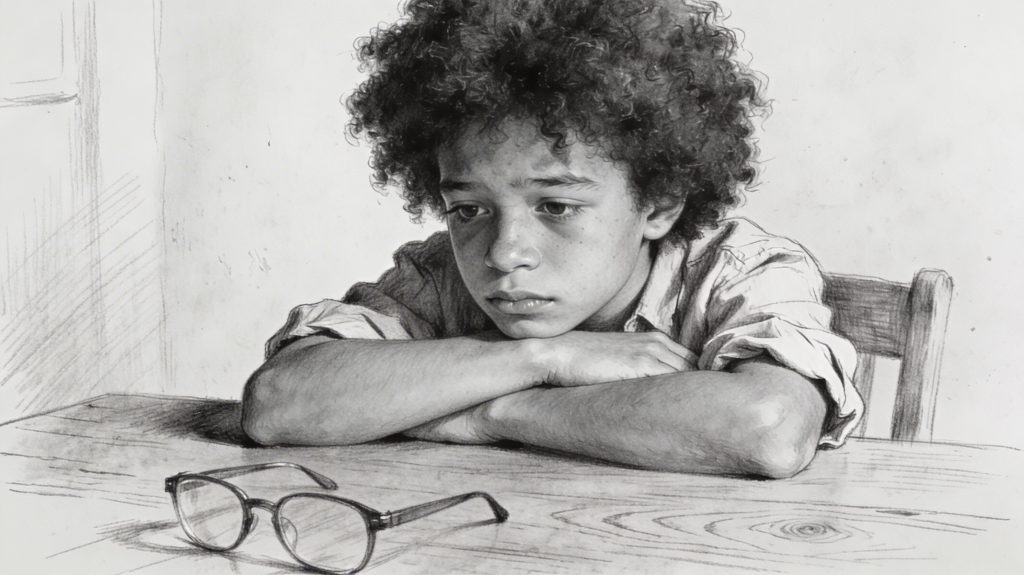
Stepping back from a family relationship is not the same as breaking the family. It is choosing a space where your dignity is not constantly attacked and your value is not constantly watered down. The big question is: when does this become necessary?
By Nosakhare Osawe · Published September 1st, 2026

Photo credit: Cottonbro
Key Takeaways
- Stepping back is not rebellion or revenge. It can be a wise pause when continued contact turns every response into another wound.
- This applies to adult children and parents. Both can become trapped in no-win family dynamics.
- Healthy grace leaves room for truth and accountability. Dangerous grace expects one person to absorb repeated harm for the sake of “peace.”
- Distance does not always mean the family is broken forever. Sometimes it is the only space where dignity, clarity, and wiser contact can begin.
A message came from my father. It was not the first difficult message, but it became a turning point.
I could not reply in a way that would land well without betraying either his feelings or mine. If I focused only on protecting his feelings, I would have to smooth over the truth and crawl under my own skin because I had abandoned myself. If I tried to speak honestly about what I felt, no matter how carefully I chose my words, it would likely be received as disrespect.
So I stayed silent. I hoped there would be a moment when I could find a response that did not disrespect someone I still wanted to honour, while also not forcing me to betray myself.
But silence did not bring peace. Over time, videos began to arrive: about children who say their father did nothing for them, about wives and mothers manipulating their sons, and about children abandoning their fathers. Then came calls from relatives and acquaintances, sharing things he had said about me and my family. Some were unpleasant. Some were deeply private. Some were not true.
Then, during a season when I had just given birth to my third baby and my newborn was in the neonatal ward for further observation, another message arrived. It was full of assumptions about my motives and conclusions about my character. I had nothing left for another round of explanation, defence, or correction.
So I sent two words: “I’m tired.”
The response did not make room for that exhaustion. It questioned why I was tired, framed my need for space as a personal offence, revisited old accusations, and ended with a declaration that this would be the final communication.
I sat with it and realised something important: I had received all of this for staying silent and saying that I was tired. If I had spoken every thought in my heart, there would have been a war. In that moment, stepping back was no longer a theory. It was the only way to stop participating in a pattern where every response seemed to create another penalty.
This story is not only about adult children. Parents can also find themselves in no-win dynamics: every attempt to reach out is called interference, every question is treated as control, and every silence is interpreted as punishment. Stepping back can be necessary on either side when engagement no longer protects dignity, truth, or peace.
A note on stepping back
Stepping back is not about punishing the other person, holding a grudge, or cutting ties in anger. It is recognising that when engaging only breeds further conflict, distortion, or self-betrayal, distance can become the only responsible boundary left.
Healthy Grace vs. Dangerous Grace: Where Is the Line?
In family dynamics, we talk a lot about grace. We are told to honour our elders, bear with family flaws, and let things go for the sake of peace. But there is a vital distinction between healthy grace and dangerous grace.
Healthy grace recognises human weakness. It extends patience for honest mistakes, forgives flaws, and gives room for people to grow without expecting perfection. But healthy grace always leaves room for truth, accountability, and mutual respect.
Dangerous grace, on the other hand, demands that you absorb ongoing disrespect to protect someone else’s comfort. It requires you to lie about your feelings, minimise harm, and accept mistreatment as the cost of admission to the relationship. When grace becomes an obligation to endure mistreatment without a voice, it ceases to be love. It becomes enabling.
- • Healthy Grace: “I forgive you for hurting me, and we can talk about how to move forward with mutual respect.”
- • Dangerous Grace: “I must accept being spoken to harshly because naming it will upset the peace or be called disrespect.”
8 Signs It’s Time to Step Back From a Family Relationship
These signs can show up on either side of a family relationship. An adult child may need space from a parent. A parent may need space from an adult child. The point is not to decide who is “the villain.” The point is to recognise when continued contact is no longer producing understanding, safety, dignity, or peace.
1. When every attempt at communication becomes an accusation
Healthy communication leaves room for different perspectives. A no-win dynamic develops when every attempt to explain yourself, ask a question, express concern, or name a hurt is immediately treated as proof that you are disrespectful, controlling, ungrateful, manipulative, or impossible to please.
What this can look like: An adult child tries to explain why something hurt and is accused of disrespect. A parent tries to express concern about a relationship, a child, or a sudden withdrawal and is told they are interfering or trying to control everything. In both cases, there is no curiosity. There is only a verdict.
2. When peace depends on one person pretending nothing is wrong
Peace is not the same as silence. If the only way to keep a family gathering, phone call, or relationship calm is for one person to swallow every hurt, ignore every insult, or act as though a serious problem never happened, that is not peace. It is emotional management.
What this can look like: A parent keeps quiet about being excluded because raising it will lead to more accusations. An adult child keeps quiet about hurtful treatment because speaking honestly will be called rebellion. Both people may be exhausted, but only one person is being asked to carry all the discomfort.
3. When a reasonable boundary is treated as a personal attack
Boundaries are not attacks. They are information about what someone can and cannot participate in safely. But in a strained relationship, even a simple request for space, a respectful tone, privacy, or a different way of communicating can be interpreted as rejection.
What this can look like: An adult child says, “I cannot discuss this by phone right now,” and is accused of disrespect. A parent says, “I will not continue this conversation while we are shouting,” and is accused of withholding love. The boundary itself becomes the offence.
4. When the same conflict keeps returning without repair
Every family has difficult conversations. The concern is not that conflict exists. The concern is when the same conflict keeps returning because nobody is listening, no one is taking responsibility, and each conversation ends with more hurt than clarity.
What this can look like: A parent and adult child revisit the same argument every few weeks or months. One person keeps explaining. The other keeps defending. The details change, but the outcome does not. The only constant is exhaustion.
5. When basic respect has become something you must fight for
Family relationships should not require anyone to fight repeatedly for basic courtesy, privacy, honesty, or a non-combative tone. Differences can be real and still be handled with dignity. When dignity disappears, closeness becomes difficult to sustain.
What this can look like: You are no longer discussing the actual issue. You are trying to establish whether you are allowed to finish a sentence, decline an invitation, ask a question, express sadness, or be treated kindly at all.
6. When the past is used as leverage instead of a place for understanding
Family history matters. Past harm, past sacrifices, and old wounds deserve to be named honestly. But history becomes destructive when it is used only to win the current argument, shame someone into silence, or make them permanently indebted.
What this can look like: An adult child raises a current concern and hears a list of everything a parent provided years ago. A parent raises a present-day hurt and hears only a catalogue of their past failures. The goal is no longer understanding. It is leverage.
7. When connection survives only if one person stays silent
A relationship cannot be genuinely close if it survives only when one person agrees, apologises first, stays quiet, or absorbs every uncomfortable feeling alone. That is not mutual connection. It is conditional access.
What this can look like: As long as you agree, do not question anything, and keep your feelings hidden, the relationship appears peaceful. The moment you tell the truth, the connection collapses into blame, withdrawal, threats, or public storytelling.
8. When staying engaged steadily costs you your dignity
There comes a point when staying in the conversation requires too much. If every contact leaves you anxious, ashamed, diminished, emotionally flooded, or afraid of the next message, it may be time to create space. This is not always no contact. It may be lower contact, written communication only, shorter visits, or a pause while emotions settle.
What this can look like: You begin to dread every call, message, holiday, or family gathering. You rehearse conversations in your head for hours. You lose sleep. You feel that preserving the relationship requires you to keep sacrificing your peace and self-respect.
What Stepping Back Actually Looks Like in Practice
Stepping back does not require a dramatic exit, a long manifesto, or a heated confrontation. It can mean taking a pause, changing how you communicate, shortening visits, moving to written contact, refusing to discuss certain subjects, or giving each other enough space for emotions to settle.
Stepping back looks like quiet, steady disengagement.
It may mean declining to respond to baiting messages. It may mean refusing to argue over whether your boundaries are valid. It may mean keeping necessary communication brief, polite, and neutral, while redirecting your emotional energy toward relationships where trust and respect are mutual.
Family estrangement is rarely simple. It often involves years of unresolved hurt, conflicting stories, difficult boundaries, and different ideas about what repair should require. Stepping back may not solve every problem, but it can create the emotional space needed to stop repeating the same damaging pattern.
For a wider exploration of fractured family relationships, see Karl Pillemer’s Fault Lines: Fractured Families and How to Mend Them. Read more here.Stepping Back Is Not Always the End of Family
Stepping back is not always a declaration that love has disappeared. It can be an honest decision to stop the damage long enough for dignity, clarity, and emotional safety to return.
For some families, space becomes the beginning of healthier contact later. For others, it becomes a longer boundary. No one can predict that outcome alone. But no relationship is strengthened by forcing someone to remain in a conversation that repeatedly strips them of peace or self-respect.
Distance is not automatically rejection. Sometimes it is the space where both people must finally face what closeness has been costing.
This post sits alongside other conversations on distance, boundaries, and estrangement. For more insight, read 9 Parental Habits That Cause Estrangement With Adult Children, 10 Ways Parents Can Survive Estrangement From an Adult Child, and Forgiveness Is Not Enough: Boundaries in Estranged Family Relationships.
Visit our Resource and Books page for downloadable guides and tools that help you build emotional safety, presence, and lasting closeness with your family, one small step at a time. All yours, free.
Visit the Resource LibraryNote: This article offers general educational reflection, not therapy, legal advice, or a diagnosis of any family relationship. Where there has been abuse, coercive control, violence, or serious mental-health risk, seek qualified local and specialist support.
Stepping back is not walking away in anger. It is refusing to play a game where the rules are designed for you to lose.