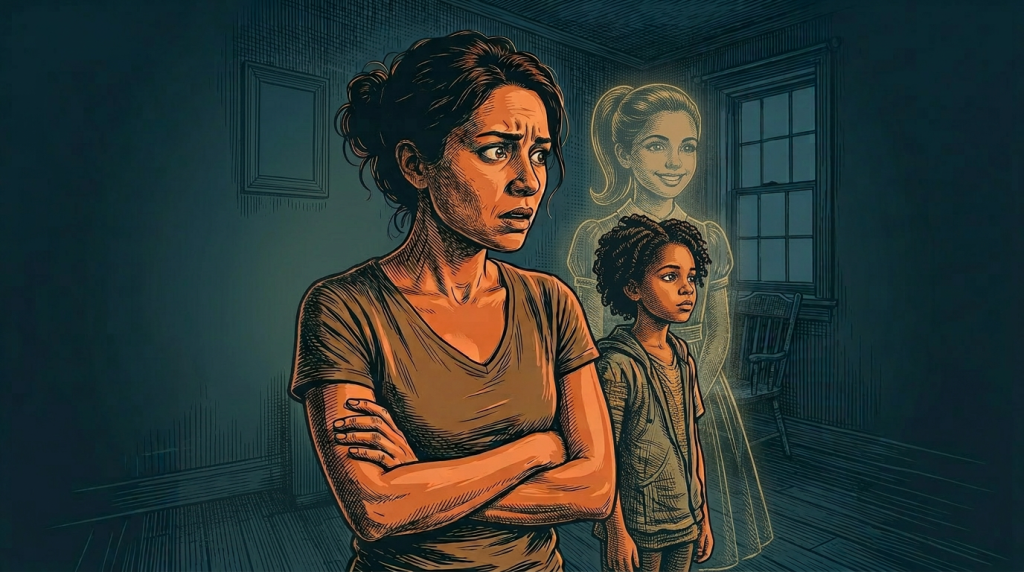
Sometimes forgiveness is not enough in estranged family relationships. If you are an adult child or a parent navigating hurt, boundaries, and the limits of reconciliation, there is a question you will have to answer at some point: is forgiveness truly enough?
By Nosakhare Osawe · Published July 25, 2026

Credit: [photographer name]
Key Takeaways
- This conversation is for adult children and parents. Hurt, forgiveness, and boundaries can exist on both sides of estrangement.
- Forgiveness is internal. Boundaries are about access. They are not the same thing.
- You can forgive someone completely and still limit or end contact.
- Reconciliation requires acknowledgement, accountability, and changed behaviour over time from whoever caused harm.
- Guilt is common. It does not automatically mean a boundary is wrong.
Messages come from both sides of estrangement. Some come from adult children who have created distance from a parent. Others come from parents who are estranged from their grown children. Many come from people who are raising children while carrying hurt from their own upbringing.
One adult child wrote: “I forgave my parent long ago. But I could not keep getting hurt and keep forgiving. That is exhausting. So I put boundaries in place. Over time, the contact lessened, and for a season, it became almost no contact.”
A parent wrote something just as honest: “I have asked for forgiveness. I am trying to change. But I also understand that my adult child may need their boundaries to stay in place for a while. I am learning to respect that.”
Different stories. Same core truth: forgiveness and boundaries can exist together. Not as opposites. Not in sequence. Together.
This is often the hidden centre of estrangement. Everyone talks about healing. Everyone talks about forgiveness. Very few people talk about what comes after forgiveness when the source of the wound is still active, still present, and still arriving at your door physically or virtually.
Forgiveness can heal the heart. Boundaries protect people from unhealthy access. You may need both. They are not the same thing.
Forgiveness does not cancel the need for wisdom. Boundaries do not cancel the possibility of love.
A necessary clarification
This article is not asking adult children to minimise real harm or asking estranged parents to accept blame for every conflict. Estrangement is complex. Family history, divorce, addiction, abuse, grief, mental health, partners, culture, finances, and years of misunderstanding can all be part of the story.
People can change, and some do the difficult work of acknowledging harm, accepting responsibility, and rebuilding trust over time. But forgiveness is not evidence that change has already happened. Change is demonstrated through consistent behaviour. For a reader-friendly perspective on healing in strained family relationships, see Greater Good Magazine’s guide to healing estranged family relationships.
What forgiveness means in estrangement
Forgiveness means different things to different people. For some, it is a spiritual practice. For others, it is a gradual decision to stop feeding resentment. For others still, it is simply reaching a point where the past no longer controls every present-day choice.
Whatever language you use, forgiveness is not saying that what happened was okay. It is not denying harm, rewriting history, or giving someone a pass.
It can be the decision to put down the rope tied to the pain they caused, not because the pain was small, but because carrying it every day is too heavy. You put it down so your hands are free to hold something else: your health, your children, your peace, your future, or the possibility of a wiser relationship.
But forgiveness does not automatically change the other person. It does not create insight where there is denial, accountability where there is blame, or safety where harmful patterns continue.
You can forgive someone and still need distance, limited contact, or a clear boundary.
That is not a contradiction. In estrangement, it may be clarity.
Forgiveness does not equal reconciliation
In many families, forgiveness was treated as a public performance. You proved you had forgiven by answering every call, attending every gathering, allowing the usual access, and acting as if nothing had happened.
But forgiveness and reconciliation are not the same decision.
Forgiveness can happen inside one person. Reconciliation is relational. It requires both people to take part. It grows through truth, acknowledgement, accountability, repair, and changed behaviour over time.
That applies to adult children and parents alike. An adult child may forgive a parent and still need distance. A parent may forgive an adult child and still need to stop chasing, guilting, or forcing contact. Both may need boundaries while deciding whether trust can be rebuilt.
Something worth reflecting on: Have you ever forgiven someone and then felt pressured to restore the relationship before trust was ready?
Or have you expected forgiveness to give you access to someone who was still hurt?
Be honest about the answer. It changes what repair requires.
| Forgiveness | Reconciliation |
|---|---|
| Can be an internal process. | Is a relationship process. |
| May not require contact. | Requires willing participation from both people. |
| Can happen while maintaining distance. | Requires honesty, accountability, and rebuilt trust. |
| Can support peace. | Can restore connection, if it is safe and mutual. |
Three decisions, not one
Estrangement becomes more confusing when people combine three different decisions into one emotional question.
Forgiveness asks:
Can I release resentment and loosen the past’s grip on me?
Boundaries ask:
What level of access is safe and appropriate today?
Reconciliation asks:
Has enough changed, on both sides where needed, to begin rebuilding trust?
Those are three different questions. They deserve three different answers.
Boundaries work both ways
Boundaries are not only for adult children who step back from parents. They are not only for parents who decide to limit access to grandchildren. Boundaries work in every direction.
An adult child may need to say, “I can forgive you and still need space.” A parent may need to say, “I love you, and I will stop pressuring you to talk before you are ready.” A parent who is now raising children may need to say, “My own childhood history will not decide who gets unlimited access to my home.”
A boundary is not a verdict that someone is beyond love. It is a decision about what access is wise, safe, and workable now.
For adult children: You do not have to accept repeated harm to prove that you have forgiven.
For estranged parents: You cannot demand access as proof that you have been forgiven. Respecting a boundary may be one of the clearest ways to show that you are changing.
For parents raising children: Protecting your home from harmful patterns is not betrayal. It is responsible parenting.
Why boundaries matter when children are involved
When you have children, the calculation changes. They did not inherit your history with a parent, grandparent, sibling, or other family member. They cannot read the patterns that took you years to understand. They cannot protect themselves from dynamics they do not yet see.
The person who wounded you does not automatically become safe for your children because time has passed, because they are now a grandparent, or because you have forgiven them. At the same time, a parent estranged from an adult child should not assume that becoming a grandparent creates an automatic right to access.
Protecting children from ongoing harm is not unforgiveness. It is parenting.
What children learn when boundaries are absent
When children watch adults repeatedly accept harm and continue the relationship unchanged, they can learn that love requires tolerating mistreatment and that family loyalty means staying silent.
But when they watch an adult hold a boundary with clarity and without cruelty, they learn something better: love and limits can coexist. You can care about someone and still protect yourself. You can say no without becoming unkind.
The FENCE framework for estranged families
Boundaries are not always walls or permanent punishments. They are decisions about what level of access is safe and appropriate in the relationship as it exists today.
F: Face what is actually happening
Look at what is true today, not only what you hope will happen. Has harm been acknowledged? Is blame still being shifted? Has behaviour changed? Is contact emotionally and physically safe?
E: Establish what you are protecting
You may be protecting your peace, your child’s safety, the emotional climate of your home, your marriage, or simply the room needed for a difficult relationship to cool down. A boundary with a purpose is not punishment.
N: Name the boundary specifically
Vague boundaries do not hold. “I need space” is a feeling. “I will reply by email only for the next month” or “Visits will happen only when both parents are present” are clear boundaries.
C: Choose your response in advance
A boundary needs follow-through. Decide in a calm moment what you will do when it is crossed: pause the conversation, end the visit, step back from contact, or share less personal information.
E: Expect resistance and stay respectful
Boundaries may be called punishment, selfishness, unforgiveness, or proof that you do not care. Expect the resistance. It does not automatically mean the boundary is wrong. But keep your own side clear, calm, and respectful.
When resistance comes, it might sound like:
“You are punishing me.” “You are keeping the children away.” “What about forgiveness?” “If you loved me, you would talk to me.”
Calm responses: “This is not punishment. It is a boundary.” “Forgiveness and access are different.” “I am not asking you to agree. I am asking you to respect this.”
What wise boundaries can look like
| Situation | A possible boundary |
|---|---|
| A parent or adult child needs a break from difficult calls. | Communicate by email or text only for a defined period. |
| A grandparent repeatedly ignores parenting decisions. | Visits happen only while a parent is present. |
| A relative criticises or shames someone during contact. | End the call or visit when criticism begins. |
| Someone repeatedly brings up an off-limits issue. | State that the subject is closed and end contact if it continues. |
| A family member shares private information. | Share less until confidentiality is demonstrated over time. |

Credit: [photographer name]
Three ways to hold a boundary without guilt
1. Separate forgiveness from access
Have the forgiveness conversation internally. Make the access decision based on what is true about the relationship today. Do not let forgiveness pressure you into giving access that has not been earned or is not currently healthy.
Example: An adult child may say, “I forgive you, but I am not ready for weekly calls.” A parent may say, “I forgive you for the hurtful things said, but I will stop chasing you and give you the space you asked for.”
2. Assess behaviour, not intention
Good intentions do not erase harmful impact. An adult child may say they need distance but still send messages that wound. A parent may say they want reconciliation but still blame, guilt, control, or dismiss. Respond to the behaviour, not only the explanation around it.
3. Let the boundary be care, not punishment
The strongest boundaries come from clarity rather than revenge. A boundary can protect both people from another damaging conversation and leave room for wiser contact later.
Try this: “I care about this relationship. I am not ready to discuss this by phone. I will reach out when I am.” Or: “I hear that you need space. I will respect it. My door is open when contact feels safe for you.”
When this advice may look different
Not every disagreement means someone is unsafe, and not every boundary needs to become no contact. Boundaries can be revisited when there is acknowledgement, sincere repair, and consistent change over time. The goal is not permanent distance at all costs. The goal is wise access based on present behaviour.
The uncomfortable truth about forgiveness and estrangement
Some adult children will experience a parent’s boundary as rejection. Some parents will experience an adult child’s boundary as disrespect. Both reactions can be painful. Neither reaction alone tells you whether the boundary is wrong.
A fence is not a wall. It has a gate. But no one is entitled to force the gate open. Respect is shown by waiting until it is safe to enter.
Estrangement does not always mean love has disappeared. Sometimes it means love, safety, grief, anger, hope, and boundaries are all trying to exist in the same family at the same time. Wisdom begins when we stop pretending one word can solve all of it.
What children learn from watching adults hold boundaries
Children are watching the principles, even when they do not know every detail. When they see adults hold boundaries with clarity and without cruelty, they learn that love and limits can coexist.
They learn that they can care about someone and still protect themselves. They learn that saying no does not make them unkind. They learn that repair is built through honesty, responsibility, and consistent behaviour, not simply through family titles.
If you are an adult child trying to understand why distance felt necessary, read 9 Parental Habits That Cause Estrangement With Adult Children.
If you are a parent struggling with the pain of distance from an adult child, read 10 Ways Parents Can Survive Estrangement From an Adult Child.
For practical guidance on approaching repair without forcing it, read How to Reconnect With an Estranged Child: It Is Not Too Late.
For a practical book on boundaries, consider Set Boundaries, Find Peace by Nedra Tawwab.
This week’s reflection
- Name one relationship where forgiveness and access may have become confused.
- Ask what you are genuinely trying to protect.
- Write one clear boundary based on today’s reality, not yesterday’s hope.
- Consider what respectful repair would need from both sides before more access becomes wise.
Visit our Resource and Books page for books and guides that help you build safety, presence, and lasting closeness with your children, one small step at a time. All yours, free.
Visit the Resource LibraryFrequently asked questions
Does forgiving someone mean I have to let them back into my life?
No. Forgiveness can be an internal process. It does not require resumed contact, restored trust, or the same level of access to you, your home, or your children.
I am a parent estranged from my adult child. Does this apply to me?
Yes. You can forgive hurtful words or actions while also respecting your adult child’s need for distance. Forgiveness does not create a right to access. A constructive next step is to listen, avoid pressure, own what is yours to own, and let changed behaviour speak over time.
What is the difference between forgiveness and reconciliation?
Forgiveness can happen internally and may not require contact. Reconciliation is relational. It requires willing participation, honesty, acknowledgement, accountability, and rebuilt trust over time.
Am I damaging my children by limiting access to extended family?
Children benefit from extended-family relationships that are safe and nurturing. Limiting access to someone who repeatedly causes harm can be a protective parenting decision. Consider the specific behaviour, the child’s wellbeing, and seek qualified support where needed.
Can a boundary change over time?
Yes. A boundary reflects the relationship as it exists now. When there is genuine accountability and sustained change, it can be revisited. No one is owed immediate access, but change can create room for wiser contact.
What if I feel guilty for maintaining a boundary?
Guilt is common, especially if you learned that your needs mattered less than another person’s comfort. Feeling guilty does not prove your boundary is wrong. Ask whether the guilt comes from a genuine ethical concern or an old pattern of over-responsibility.
Note: This article offers general educational reflection, not therapy, legal advice, or a diagnosis of any family relationship. Where there has been abuse, coercive control, violence, or serious mental-health risk, seek qualified local and specialist support.
Forgiveness may change your heart. Boundaries may protect what is still tender. Reconciliation, if it comes, must be built with truth, respect, and time.