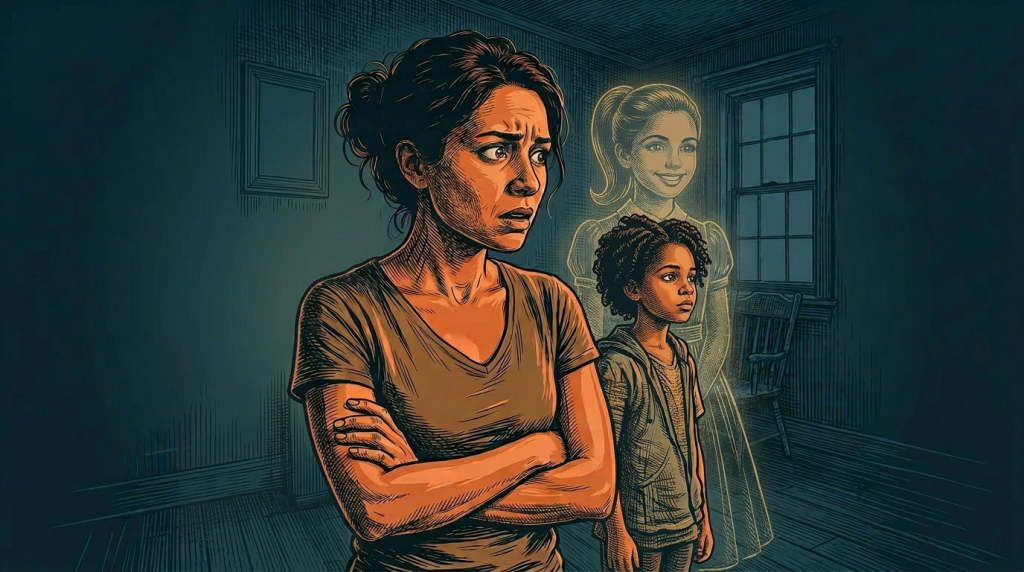
It was the day before my birthday. One of my kids had a domestic accident and needed urgent medical attention. Nobody tells you that parenting with trauma means moments like this one, where the crisis in front of you and the wound behind you arrive at the exact same time. In the middle of the chaos, my phone buzzed.
It was my dad.
I remember thinking: "Please. Not now."
But it was already there. A birthday greeting that wasn't a greeting. A message that landed like a punch I'd been dodging my whole life.
I put the phone down. I didn't respond, because I couldn't come up with. anything I will be proud of in hindsight. So I went back and continued with my child.
By the time we got home, the crisis had passed. My child was okay. I sat in my favourite corner of the living room, the place I go when I need to think, and something became very clear to me in that quiet moment.
I had been parenting with intention. Deliberately trying to change the flavour and taste of some of what was given to me. Reading everything I could find about parenting with trauma, about breaking generational cycles, about becoming a different kind of parent. Working at it every day. But in that moment I understood something I had not fully accepted before.
What I was given will always come. Because the source of it is still active, still within reach, and maintains his approach and position on everything I strive not to be.
The wound was not going to close. Not while the thing causing it was still there.
And that realisation changed everything about how I approach breaking this cycle. My kids shouldn't inherit a wound they didn't create. Not now. And certainly not later, when they are with their spouses in the middle of their own lives, trying to figure it all out.
Your father will send that message again. Your mother will say that thing again. The wound will throb again. But your children are at the dinner table tonight, and they don't care if you're healed. They need you to show up. So show up.
That's what Stop Healing, Start Building means.

Why Parenting with Trauma Is Harder Than You Ever Prepared For
There is a version of the parenting-with-trauma conversation that goes like this: heal yourself first. Do the inner work. Process your generational trauma. And then, once you are healed, you will finally be able to show up fully for your children.
It sounds right. It feels responsible. And for some people, in some seasons, that sequence makes sense.
But for a lot of us who are actively parenting with trauma still present in our lives, that is not how it works.
The wound does not close because you decided it should. Especially when the source of the wound is still active in your life. A parent who still sends messages that land like punches. A family system that has not changed and will not change. Losses that cannot be undone. Scars that have become part of how you are wired.
So what do you do? You can't afford to wait. Your children are growing up right now. Every day you wait to feel ready is a day they're being shaped by who you are today, wound and all.
Three reasons the wound may never fully heal
Understanding why the wound stays is not pessimism. It is honesty. And honesty is where real building starts.
1. The source is still active
A wound caused by someone who is no longer in your life has a chance to settle over time. But a wound caused by someone who is still sending messages, still showing up at family gatherings, still present in the lives of people you love, that wound gets reopened regularly whether you want it to or not.
You cannot fully heal from something that is still happening. What you can do is decide how much access it gets to your present.
2. The wound has already shaped your outcome
Some of what happened to you has already determined certain outcomes in your life. Opportunities you did not have. Confidence that was taken before you knew how to protect it. Patterns that formed in you before you were old enough to choose them. You cannot unhappen those things.
What you can do is refuse to let the consequences of those things become your children's starting point.
3. The wound has become part of you
For many of us, the wound is no longer something that happened to us. It is something woven into how we see, how we react, how we love, how we protect ourselves. It shows up in our triggers. In the things we cannot hear without flinching. In the way certain tones of voice still make our body respond before our brain catches up.
That is not weakness. That is what sustained exposure to pain does to a human nervous system. It adapts. It learns. It protects.
The goal is not to unwire all of that. The goal is to make sure it does not become the loudest voice in the room when your children need you.
The Truth About Parents Who Resist Change.
Some parents don't just wound you. They keep wounding you. On purpose. On schedule. They send messages on your birthday. They call at the worst moments. They know exactly where you're tender, and they poke.
You've spent years making excuses for them. "They don't mean it." "They're just old." "That's how they were raised."
What if they do mean it?
What if you stopped needing them to be different? What if you stopped waiting for their apology? What if you accepted that they are who they are, and then built something better anyway?
That's not bitterness. That's freedom.
What I did instead
That Thursday evening I made a decision. I was going to develop what I call a high-pass filter in my mind. A mental switch that I could throw quickly when something came in that would pull me out of the parent I was choosing to be.
I looked at that message. I felt the heat rise. And I said out loud, in my empty living room: "Not today. Not in this house. You don't get to run my evening."
That was the filter. That was the choice.
When that message arrived from my dad, I had three choices. I could engage and hear more, because there is always more from where that comes from. I could respond and then spend the next week apologising for what came out of me. Or I could ignore it, protect my peace, and walk back into my home as the version of myself my children deserved that evening.
I chose the third option. I didn't feel strong. I felt scared. But I walked into that living room anyway, because my kids needed the version of me that chose them over a conflict that would only take from me.
The wound may always be there. That is okay. You are not waiting for it to leave. You are building anyway. Building away.
Not because I am healed. Not because it did not affect me. But because I had decided that the mood in my home and the part of me my kids receive every day was not going to be determined by a source I cannot fix.
That is what Stop Healing, Start Building actually means for anyone parenting with trauma. It is not a self-help slogan. It is a daily practice of breaking generational cycles one ordinary evening at a time.
It does not mean the wound is not there. It does not mean you stop trying to process it. It means you refuse to let it run the house.
Something worth sitting with: What would change in your home today if you stopped waiting to feel healed before showing up fully? Not perfectly. Just fully.

What building looks like in practice
Building is never instant, and it will never be. It is a series of small choices made in ordinary moments that slowly add up to a different family story.
It is choosing, on a Thursday evening when you have just received a message that could ruin you, to put the phone down and walk back in as the parent your child needs.
It is deciding what gets access to your mood and what does not. Not because you are pretending the hard things are not there. But because you have decided that your children's experience of home is worth protecting, even on the days when everything in you wants to fall apart.
It is letting healing happen on the side, quietly, in the ways available to you, while simultaneously building something real in the present.
Healing and building are not opposites. They are parallel tracks. Every cycle breaker parent doing this work knows that generational trauma does not wait for a convenient moment to show up. You do not have to choose between healing and building. You just have to stop letting the unfinished work of healing become an excuse to delay the building.
The three pillars this series is built on
Over the next four posts in this series, we are going to go deep on each of the three things that make this possible.
The first is learning to read the map your parents gave you. Not to follow it, but to know exactly where not to go. For anyone parenting with trauma, your history is not just pain. It is data. It tells you exactly which generational cycles need breaking.
The second is acting into the parent you want to be before you feel ready. Because readiness is a lie we tell ourselves to stay safe. Action comes first. The feeling follows.
The third is building fences. Real ones. Not just forgiving and moving on, but creating actual boundaries that protect what you are building from what keeps trying to pull you back.
Each of those deserves its own post. And each one will have something personal in it from my own journey, because I am not writing about this from a distance. I am writing about it from the living room where I sat the evening before my birthday and decided that the wound was not going to win.
One thing to do today Think about the last time something from your past pulled you out of the parent you are trying to be. Not to judge yourself for it. Just to name it. What was it? Where did it come from? And what would your high-pass filter look like the next time it arrives?
And if staying regulated in hard moments is something you are actively working on, this post on handling disrespect without escalating looks at the same muscle from a different angle.
For the research behind why managing emotional responses matters more than eliminating them, The Body Keeps the Score by Bessel van der Kolk remains one of the most important books written on what trauma actually does to a person, and what it means to live well alongside it rather than waiting to be free of it.
Visit our Resource Library for books and guides that help you build safety, presence, and lasting closeness with your child, one small step at a time. All yours, free.
Get the Free ResourcesFrequently asked questions
What does Stop Healing Start Building mean for parents dealing with generational trauma?
It means you stop waiting. Stop waiting for the apology that is not coming. Stop waiting for the day you do not flinch when they call. Parenting with trauma is not about being fixed before you show up. Your kids are growing. They need you now. The you that exists, wound and all. That is who they need.
Is this saying therapy does not matter when parenting with trauma?
No. Therapy matters. Healing matters. What this series challenges is the idea that healing generational trauma has to be complete before you can start building intentional parenting habits. They happen at the same time. For most cycle breaker parents, they have to.
The wound may always be there. That is okay. You are not waiting for it to leave. You are building anyway. Building away.