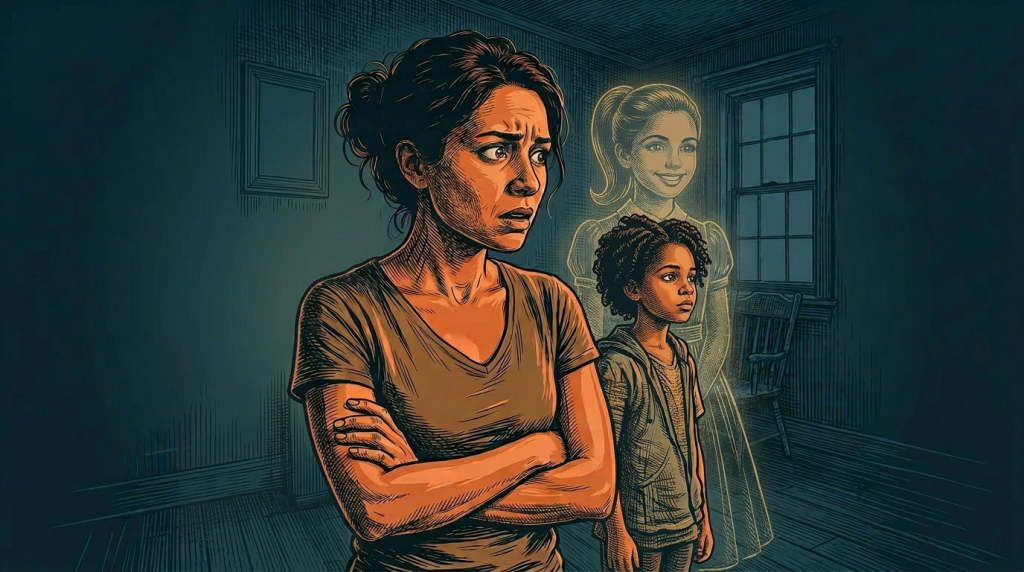
At some point in our childhood, most of us made ourselves a promise. Something like: "When I have kids, I will never do that." A promise is not a plan. Every parent who wants to become a better parent than they had needs more than good intentions.
We need something to reach for.
And that something is already inside us. It has been there our whole lives. We have just been reading it wrong.
Our childhood did not only give us wounds. It gave us the most detailed education in child psychology we will ever receive, because we lived it from the inside. We did not study what emotional neglect does to a child. We experienced it. We know what it costs a child to spend their energy reading the room instead of simply being in it.
That is not baggage. That is data.
And data, read correctly, becomes direction.
The childhood we are trying to escape is also our most detailed guide to becoming better parents. The question is not whether we can use it. The question is whether we know how to read it.

The thing most of us get wrong about cycle breaker parenting
Most of us make a mental list of everything our parents did wrong. We swear on that list. We carry it into every hard parenting moment as a reminder of what we are fighting against.
It works. For a while.
Until it does not.
A list of "I will never do that" only tells us where not to go. It does not tell us where to go instead. And when we are standing in a hard moment with our children, tired and triggered and running low on everything, "I will not do what was done to me" is not enough on its own. Our nervous systems need something to reach for. If the only thing we have built is a wall between us and the past, our hands are empty.
So we reach for the familiar thing. The one already in our bodies, even though we hate it. And then we spend the next hour feeling like everything we promised ourselves has collapsed in a three-minute argument about homework.
Sound familiar?
Good. Because what comes next changes that.
Five ways to use our childhood to become better parents
These are not theories. Each one is a practical shift any parent can use to become a better parent than they had. Small in description. Significant in practice.
1. Ask what was missing, not just what went wrong
The absence of something shapes a child just as powerfully as the presence of harm.
What did we need most that was never there? Not the dramatic things. The quiet daily ones. Someone who believed us. Someone who stayed calm when things got hard. Someone who said "I was wrong" without it being a crisis. Someone who let our feelings exist in the room without rushing them away.
Whatever that thing is, it is our most important parenting instruction. We already know, better than most, exactly what it costs a child to grow up without it. Give our children that thing deliberately and consistently. Not because a book said to. Because we know what it is like to need it and never find it.
The takeaway: What you needed most and never received is the clearest signal of what your children need from you right now. Using it is one of the most direct ways to become a better parent than the one you had.
2. Learn to catch yourself mid-script
We all know those moments when something comes out of our mouths and we hear our parent in it. That is the old script running. It runs fast. Especially under stress. Especially when our children are doing the exact thing that used to push every button in the adults around us.
The goal is not to never run the old script. That standard will break us. The goal is to catch it earlier each time. Mid-sentence instead of mid-argument. Rising in us before it comes out instead of only after the damage is done.
Picture this: your child talks back sharply and you feel the heat rise. Before you speak, one question lands quietly: "Who said that to me first?" That pause is not weakness. That is cycle breaker parenting happening in real time. Research on parental resilience from the APA consistently shows that awareness of our own patterns is the single strongest predictor of whether we repeat them.
The takeaway: You cannot rewrite a script you have not read. Know it specifically so you can catch it early.
Gut check: Think of the last time something came out of your mouth that felt uncomfortably familiar. Where have you heard it before? Who said it first?
3. Use the moments that still sting as your most specific instructions
Most of us have memories that still land with weight. Not always the biggest ones. Sometimes the quiet ones. A sentence someone said. The way a particular silence felt. The moment we stopped bringing certain things to certain people because the cost was too high.
Those moments are not just wounds. They are specific instructions.
The memory of being dismissed tells us exactly how important it is that our children feel heard. The memory of being compared tells us what comparison does to a child's sense of self. The memory of never being apologised to tells us exactly what an apology from a parent actually means to a child who receives one.
The takeaway: Our most unresolved memories are also our most specific parenting instructions. Do not waste them.
4. Notice what your children's behaviour is asking you to remember
Children have an uncanny ability to find the exact pressure point we have not finished processing. Not on purpose. They are just being children. But our children's most triggering behaviour is often pointing directly at our most unresolved wound.
When our children trigger us, alongside asking "what is going on with them right now," try also asking "what is this reminding me of?" The second question will not always be comfortable. It will almost always be more useful. Those two things pointing at the same place is not a coincidence. It is information.
5. Build toward what we needed, not just away from what hurt us
Running away from the past gives us direction for a while. But at some point, running away from something and running toward something feel very different in the body. One is driven by fear. The other is driven by purpose. Purpose lasts longer.
When we know specifically what we needed and did not receive, we can build toward that thing with intention. Not just avoid its opposite. Actually build toward it. Make it a daily practice in our home, because we know its value better than most people ever will.
The parent who was never believed builds a home where being believed is the default. The parent who was never apologised to makes repair a normal part of how their family works. The parent who grew up where peace was always conditional makes unconditional emotional safety the standard their children measure everything else against.
That is not just breaking a cycle. That is building a legacy.
The takeaway: Build toward what you needed, not just away from what hurt you. One is survival. The other is transformation.

What we have been carrying is not just a wound
Many of us have been carrying our childhood like something to survive. Something to outrun. Something to finally put down when we have done enough work on ourselves.
What if we have been holding it wrong?
We know things about children that parents who had easy childhoods will never know. We know what children need from the inside. We know the cost of certain absences and the weight of certain silences. We know the long-term damage of things that felt ordinary at the time.
That is not baggage. That is data.
And it makes us, when we choose to use it consciously, some of the most equipped parents our children could ever have.
We did not get the childhood we deserved. But every one of us can still become a better parent than we had. Our children might just get the parents they deserve, because of everything ours put us through.
That is not nothing. That is everything.
One thing to do this week Pick one moment from our childhood that still stings. Not the biggest one. A quiet ordinary one. Ask: what does this moment tell me about what my children need from me? Write down one specific thing to do differently this week because of what that moment taught us. Just one thing. That is enough.
If you missed the first post in this series, Parenting With Trauma: How To Parent Well When Your Childhood Was Hard is where this all started.
And if you want to see evidence that you are already further along than you think, 5 Proven Ways To Parent Differently Than You Were Raised will probably show you progress you did not know you were making.
For the science behind how childhood shapes the way we parent, The Body Keeps the Score by Bessel van der Kolk is still the most important book written on this subject.
Visit our Resource and Books page for books and guides that help you build safety, presence, and lasting closeness with your child, one small step at a time. All yours, free.
Visit the Resource LibraryFrequently asked questions
How does our childhood help us become better parents?
Our childhood gave us a firsthand education in what children need and what harms them. When we read it consciously instead of reacting to it, it becomes one of the most direct paths to become a better parent than the one we had. The things that hurt us most are often the things that make us most intentional in those specific areas.
What if we keep repeating the patterns we grew up with?
That is normal, especially under stress. The goal is not to never run the old script. It is to catch it earlier each time. The more specifically we know what the pattern looks like, the faster we can interrupt it. Awareness comes before change. Always.
Do we need to heal before we can use our past as a guide?
No. The guidance is available to us right now, wounds and all. Some of the most useful information in our past comes from the things that still hurt. We do not need to be healed to use what we know. We just need to be paying attention.
What if the source of our childhood wounds is still in our lives?
Then the wound keeps getting reopened, which makes the work harder but not impossible. What we can control is how much access that source gets to our present, our mood, and the version of ourselves our children receive every day. That is the high-pass filter we discussed in the first post in this series.
We did not get the childhood we deserved. But we can still become a better parent than we had. And our children might just get the parents they deserve, because of everything ours put us through.