Before you send a first message to your estranged adult child, there is one thing that matters more than when you send it or which app you use. Most parents cannot see it in their own words. This post shows you where to look.
By Nosakhare Osawe · Published October 12, 2026

The parent holds the first word. The grown child decides whether to turn around.
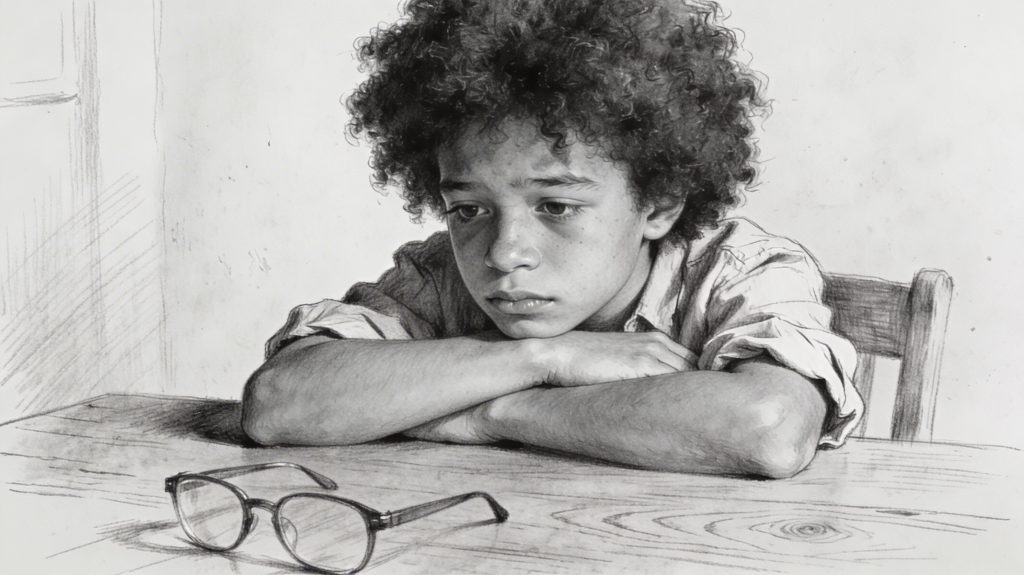
Image: Family Journey Online
Key Takeaways
- Unless your intention is to escalate, every word must be free of ambiguity and sarcasm. You will not be there to explain what you meant.
- Your first message is a first reading, not a defence. A reply, if one comes, may help you understand whether this is a misunderstanding, a hurt to repair, or something that needs time.
- The 4R First Message has four parts: Recognise their need, take Responsibility, Respect their choice, and leave a way to Return.
This is part three of a four-part guide
This four-part guide covers deciding whether to reach out, involving someone else, writing a first message, and living with the silence. This post is for when you are ready to write: what to say in your first message.
- Should You Contact Your Estranged Adult Child?
- How to Contact Your Estranged Adult Child Using a Third Party
- What to Say to Your Estranged Adult Child (you are here)
- 10 Unique Ways Parents Can Survive Estrangement From an Adult Child
Before you write: If your adult child has asked for no contact, has blocked you across channels, or there is a protective order or any safety concern, do not send a message in any form. A letter or email is still contact. Start with part one of this guide instead. Do not use someone else to get around the request. Part two explains how a parent who believes they had a hand in the distance may, after real time has passed, reach out once through someone the child trusts, and accept the answer. This article provides general relationship guidance, not legal or clinical advice.
You have typed the message. You have read it ten times. Your thumb is hovering over Send.
You know one message can leave a door open, or make your child more certain that distance was necessary.
The most important thing about this message is not mainly when you send it. It is not mainly whether you send it by WhatsApp, text, email, or a physical letter.
It is something else entirely. And I learned it from the other side of the screen.
Two lines that changed a birthday message
A while ago, my father sent me an SMS on my birthday. He does not usually send birthday messages, so it stood out.
It reached me in one of the hardest seasons of my life. I was carrying something heavy, something I had told him about months before. He had not asked about it since.
The message opened like any birthday greeting. Congratulations. Many happy returns. Then came this line:
“…most leaders of this country did not attain this age when the mantle of responsibility fell on them.”
And it ended with this one:
“I wish you the best as you wish yourself.”
Those two lines changed everything around them. The first measured me against men who were running a country at my age. The second handed my good wishes back to me to arrange for myself. With those two lines in it, the message was anything but a congratulation.
I read it several times. I wanted to reply. I could not find the words.
I cannot know for certain what my father intended. I only had what was on my screen. And that is exactly the point. When a message arrives, the sender is not standing beside it to explain. When someone is already hurt, words that can be read two ways can easily be read the painful way.
A better month would not have changed those two lines. You cannot control what your child is facing when your message arrives. You can control every word in it.
Unless your intention is to escalate, every word in your message must be free of ambiguity, sarcasm, or anything that leaves the interpretation open-ended. You will not get the chance to explain your good intentions. The words have to do that for you.
Why most first messages to an estranged adult child fail
Parents usually write the message they need to send. Adult children respond to the message they need to receive. Those are rarely the same message.
The message a hurting parent needs to send explains. It defends. It reminds the child of everything that was given. It ends with a request: call me, come home, let me see the grandchildren. And very often it includes the sentence that undoes everything else: “After everything I have done for you…”
The message an estranged adult child may be able to receive is much smaller. It answers one question they may have been carrying for a long time:
“If I let this parent back into my life, will anything actually be different?”
A first message is not a closing argument. It is evidence. Evidence that you heard them. Evidence that you can hold their hurt without making it about yours. Evidence that reaching back will not cost them the boundary they fought to build.
But be clear about its limits. No wording can guarantee a reply, forgiveness, or reconciliation. Careful words can show respect and avoid adding a new injury. What your child does next is theirs to decide.
Psychologist Joshua Coleman encourages parents seeking repair to hear their adult child's complaints without defensiveness, and to take responsibility in writing for the blind spots that hurt them. He notes that an apology is usually only the first step, not the whole repair.
Joshua Coleman, PhD, author of Rules of Estrangement. Read his guidance on repairing family rifts here.Your first message is a first reading, not a defence
When an emergency patient arrives, nobody starts with surgery. The first thing anyone does is take a reading. Blood pressure. Pulse. Breathing. Not because the reading fixes anything, but because without it, every treatment is a guess.
Your first message works the same way. It is not the cure. It is the first reading.
Many parents use it for the opposite purpose. They explain what they meant, correct what they think their child believes, and argue their side, all before they know what the problem actually is. That is like a doctor easing his own anxiety instead of first checking the patient.
Your feelings may be real, and you may feel you have been treated unfairly. Those feelings deserve a place: with a trusted friend, a counsellor, or your journal. They do not belong in the first reading.
It is also important to bear in mind that you may not get an answer right away. A reply, if one comes, may help you understand which of three situations you are in:
| What the reading may show | What it usually needs |
|---|---|
| A misunderstanding that can be cleared up quickly | A clear, honest conversation once your child is willing |
| A hurt that is yours to own and repair | Responsibility, changed behaviour, and patience over time |
| A wound that needs time more than words | Space, steadiness, and a door that stays open |
What to say to your estranged adult child: the 4R First Message
Four parts, one screen or one page or less. Each part does one job.
These are not four lines to copy. They are four things your message needs to communicate if you want it to sound different from the messages that came before it.
The FJO 4R First Message
1. Recognise. Show that you understand they needed distance.
2. Responsibility. Own your part. Specifically if you know it, honestly if you do not, and without a “but”.
3. Respect. Be honest that you hope to hear from them, and clear that the choice is theirs.
4. Return. Leave one quiet way back, with no deadline attached.
The 4R is not a surrender. You are not being asked to crawl, to confess to things you do not understand, or to pretend you feel nothing. It takes more strength to own your part and stay steady than to defend yourself or to plead.
The goal is not to sound defeated. It is to sound different.
1. Recognise
Open with their experience, not yours. One or two sentences that show you understand they stepped back for a reason, even if you do not fully understand the reason yet.
“I know you have needed distance from me, and I have been thinking about why.”
2. Responsibility
This is the heart of the message, and most parents get it wrong in one of two ways: “I am sorry for everything”, which reads as vague, or apologising for everything they can think of, which reads as desperate.
Responsibility is not grovelling, and it is not confessing to things you do not understand. It is owning what you can honestly see. If your child has ever told you what hurt them, start there, and name it specifically.
“I'm sorry I dismissed what you were telling me and kept arguing instead of listening. That was my choice, and I understand it hurt you.”
If you genuinely do not know what caused the distance, do not invent an apology for something you do not understand. Say so honestly:
“I do not fully understand what brought us here. But I can see that something in our relationship hurt you enough that you needed distance. If you ever want to explain, I will listen without arguing.”
3. Respect
Be honest here. Most parents feel their child owes them at least a reply, and pretending otherwise will ring false. You can say you hope to hear from them. What matters is that your hope does not become their obligation.
“I would love to hear from you. But I understand if you are not ready, and I will respect whatever you decide.”
4. Return
End with one simple way back. Not a demand to meet. Not a date. Just an open door they can walk through on their own terms.
“If you ever want to talk, I'll be open to listening. There's no deadline, and I won't keep messaging. I love you.”
An example first message to your estranged adult child
Here is how the four parts fit together. Use it as a shape, not a script. Your child will recognise words that are not yours.
I know you have needed distance from me, and I have been thinking about why.
When you told me you felt controlled and criticised, I defended myself instead of listening. I am sorry. You were telling me something important, and I made it about me.
I would love to hear from you, but I will not pressure you. Whatever you decide, I will respect it.
If you ever want to talk, I will listen without arguing. I love you.
Notice what is not there. No list of sacrifices. No question about why they left. No request to see the grandchildren. Each of those can come later, if a relationship returns. In the first message, they usually push it further away.
Phrases that close the door, and phrases that keep it open
| Closes the door | Keeps it open |
|---|---|
| “I did the best I could.” | “I got some important things wrong.” |
| “I'm sorry you feel that way.” | “I'm sorry I hurt you.” |
| “After everything I sacrificed for you…” | Leave sacrifices out entirely. |
| “Your father and I are heartbroken.” | Speak only for yourself. |
| “Please call me by Sunday.” | “Whenever you are ready, if you are ready.” |
| “I wish you the best as you wish yourself.” | “I hope this year is kind to you.” |
Before you press Send
Draft the first version for yourself and let it sit for a few days. Then read it as if you were your child on their worst day, and remove any sentence that:
- Could be read two ways, including comparisons, proverbs, or anything that might sound like sarcasm.
- Explains why your child should not feel hurt, or corrects their memory of events.
- Blames a spouse, therapist, sibling, friend, religion, or culture.
- Demands a reply, meeting, visit, or access to grandchildren.
- Uses guilt, illness, age, money, inheritance, or faith as leverage.
- Could have been sent to anyone. Include at least one thing only this child would recognise.
After you send it
This is the hardest part. You wait. There is no agreed timeline. Let your child's last signal guide you rather than a calendar. If you notice you want to send another message mainly because the silence hurts, that is usually a sign to wait longer.
While you wait, the 1-1-1 Rule from Your Adult Child Went No Contact. What Now? still applies.
Silence is not permission to keep messaging. If the silence continues for a long time, and your child has not asked for no contact, do not send message after message. A trusted third party is one option for finding out, gently, whether your child is open to contact at all. Part two explains how to choose and brief that person.
If they reply, even with anger, treat it as information rather than a verdict. Respond slowly, briefly, and without defending yourself.
What if your estranged adult child never responds?
You can write the most careful message of your life and still hear nothing. Not this month, not this year, perhaps not for a long time. Your child's silence is not something your words can control.
But your life does not stop while you wait. Surviving estrangement is not giving up on your child. It is staying whole enough that, if the door ever opens, there is a steady parent on the other side of it, not a broken one.
Part four of this guide, 10 unique ways parents can survive estrangement from an adult child, is for that road: how to grieve, how to keep living, and how to keep the door open without standing in it all day.
Waiting well is not the same as waiting idle. Your child may never see the work you do in the silence, but you will become the person they would meet if they came back.
Frequently asked questions
What should I say to my estranged adult child in a first message?
Keep it short. Acknowledge that they needed distance, take responsibility for specific hurts without excuses, tell them you respect their choice, and leave a simple, pressure-free way back.
Should I send a text, WhatsApp, email, or letter?
Any of them can work when no boundary forbids contact. The content matters more than the channel. If they blocked you or asked for no contact, do not assume another route is welcome.
How long should a first message be?
Usually one screen or one page or less. A long message can feel like pressure or a defence, even when that is not the intention.
Should I mention the grandchildren?
Usually not in the first message. Asking about grandchildren early can read as the real reason you are writing. Rebuild trust with your child first.
What if my adult child replies angrily?
Treat it as a beginning, not a failure. Thank them for responding, acknowledge what they said, and do not defend yourself. Anger may reflect pain, mistrust, or something else. Respond to what they actually say rather than assuming what it means.
Where to go from here
This is part three of a four-part guide.
If you are still deciding whether to reach out at all, start with part one, Should You Contact Your Estranged Adult Child? If you are thinking of asking someone else to reach out for you, read part two, How to Contact Your Estranged Adult Child Using a Third Party.
For the apology itself, How to Apologise to Your Child covers what most apologies miss, and How to Reconnect With an Estranged Child helps you think about repair without rushing it.
And if your child does not respond, part four, 10 unique ways parents can survive estrangement from an adult child, is for the road ahead.
Visit the Resource Library for books and guides that help you navigate estrangement, begin the repair process, and build the kind of relationship your adult child chooses to return to.
Visit the Resource LibraryBefore you press Send, read every sentence the way your child will read it on their worst day. If any line could mean two things, it is not ready yet.