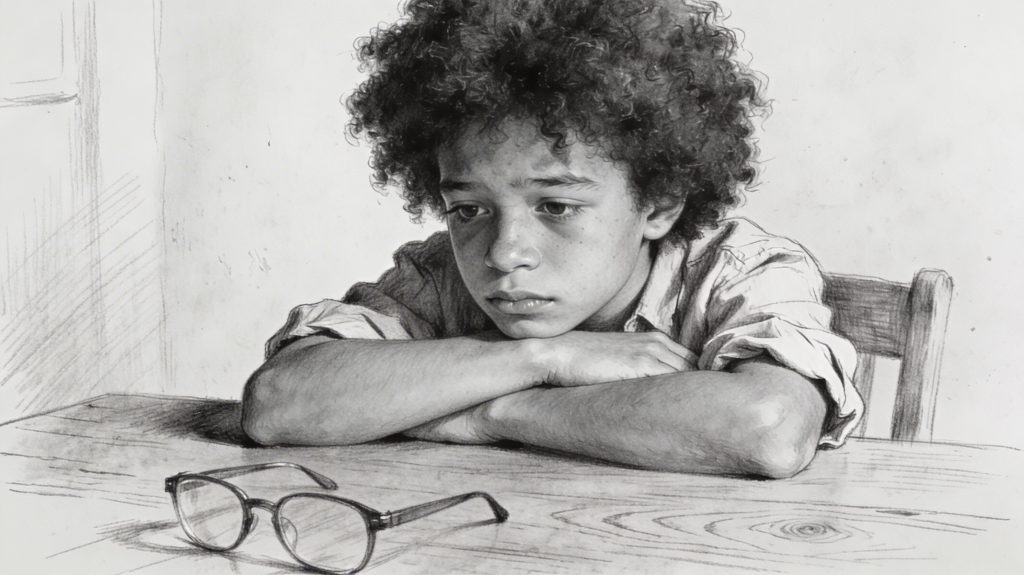
When “my child and I are not speaking” becomes “this is what adult children do these days,” you can spend more time finding people who agree with you than understanding what happened between you and your child.
By Nosakhare Osawe · Published October 20, 2026

From a distance, they all look the same. Only one of them is your child.
Photo by Efrem Efre on Pexels
Key Takeaways
- Finding people who understand your pain is not the same as finding an explanation for your estrangement.
- Another family's story can offer perspective, but it cannot tell you what happened in yours.
- You can examine your part without accepting all the blame or dismissing your own hurt.
- Good estrangement support leaves room for honest questions, including questions with unfair and uncomfortable answers.
There is nothing wrong with finding estrangement support from people who understand your pain. But their story is not an explanation for what happened between you and your child.
Their daughter is not your daughter. Their son is not your son. What caused their distance may have nothing to do with yours.
You can recognise yourself in someone else's pain without borrowing their explanation.
That distinction matters. Because when a whole group becomes your explanation, the particular person you love can disappear from the conversation.
I was reminded of this recently. A parent replied to one of my posts, and along the way described “this generation” as having little empathy and little resilience.
I understood the frustration behind it. There is truth in the idea that one poorly chosen sentence should not define a parent, and that context matters.
But I noticed how quickly one painful relationship had become a judgement about millions of people. And I realised how often support communities repeat phrases like that until they start to feel like an explanation.
There is a name for this: a hasty generalisation, judging a whole group from a few cases. It feels like understanding. It often takes us further away from it.
Your child is a person, not a category.
When “my child” becomes “adult children these days”
The problem begins when the label starts doing the thinking.
“My daughter said she felt criticised during visits” becomes “adult children cannot take correction.”
“My son has not answered my messages” becomes “this generation has no respect.”
“I do not understand why we are not speaking” becomes “their partners and therapists are turning them against us.”
Those explanations may feel convincing, especially when other people repeat them. But repetition is not evidence about your relationship.
What did your child actually say? What happened before the silence? What remains unclear? Those questions still need answers, even when a room full of people agrees with you.
Once “adult children” becomes your explanation, it can stop you from asking what happened with your child.
Two parents can share the silence without sharing the story
Imagine two parents sitting beside each other. Both have been blocked by an adult child. Both are grieving. Both want someone to tell them what to do.
From the outside, their situations look similar.
But one child may have repeatedly asked for a particular behaviour to stop. The other parent may have received no clear explanation. One relationship may involve serious harm. Another may involve misunderstandings, conflicting expectations, or events neither person fully understands.
These are examples, not a way to diagnose either family. The point is that the same outward silence does not tell you what happened underneath it.
Advice that fits one family may be unhelpful in another.
Someone else's experience can give you a question worth asking. It should not give you a verdict before you have examined your own situation.
Feeling understood is not the same as understanding what happened
When you are hurting, it can be a relief to hear, “I know exactly what you mean.” You may have spent months feeling embarrassed, confused, or unable to explain the silence to friends.
There is value in not feeling alone.
But notice the difference between someone saying, “That sounds painful,” and someone saying, “I know why your child did this.”
The first acknowledges your experience. The second claims knowledge they may not have.
Someone can believe that you are hurting without agreeing with every conclusion you have drawn. They can care about you and still ask whether there is something you have missed.
That is not necessarily taking your child's side. It may be helping you look at the relationship more carefully.
Different explanations can stand between people trying to understand a family rift.
A study of 1,035 mothers estranged from their adult children found that many attributed the estrangement to other family members or their child's mental health. The researchers noted that other studies of adult children often found different explanations, including emotional abuse, conflicting expectations, and personality clashes.
This study collected mothers' accounts. It did not interview both sides of each relationship or establish who was right. Its relevance here is the gap that can exist between people's explanations, not a verdict against parents.
Ohio State University, “Study examines what makes adult children cut ties with parents,” October 6, 2021. Read the university's summary.You cannot close that gap by collecting more people who already agree with your version. You have to leave room for what you do not yet understand.
This is not about making the parent wrong
A parent can be hurt. A parent can be treated unfairly. A parent can disagree with an accusation without being unwilling to reflect.
Understanding your child does not require you to accept every claim as fact, excuse harmful behaviour, or give up your own boundaries.
But protecting your dignity does not require you to condemn a whole generation either.
This is not about deciding that the parent must be wrong. It is about not grouping a whole generation under “adult children” and deciding they are all disrespectful, ungrateful, or beyond help before you have understood your own situation.
That road leads nowhere.
You can say, “I am hurting, and there are things I do not understand.” You do not have to turn that uncertainty into “I know exactly what is wrong with all of them.”
5 questions to ask about the estrangement support you receive
You do not need to abandon a community because someone says something you disagree with. But it is worth noticing what the conversation encourages you to do.
- Can someone question my interpretation without being accused of taking my child's side?
- Does the conversation help me separate what I know from what I assume?
- Is there room to acknowledge harmful behaviour by either person?
- Am I getting help with my grief, or mainly collecting reasons to stay angry?
- Do I leave better able to think about my own relationship, or simply more certain that a whole generation is the problem?
Support does not have to produce reconciliation to be worthwhile. It can help you get through the day, protect your wellbeing, or accept a situation you cannot change.
But it should not require you to stop asking honest questions.
Come back to the person, not the category
If one of your children has stepped away, that relationship deserves its own attention.
Even siblings growing up in the same home do not give you interchangeable relationships. Your relationship with one child does not automatically explain your relationship with another.
Come back to what this child said, what you remember, what you may have missed, and what you can honestly take responsibility for. If you do not know, allow yourself to say that.
You do not have to contact your child to begin this work. Reflection is not permission to get around a no-contact request. You can seek professional support, examine past conversations, and work on your own behaviour without asking your child to participate.
If you are unsure whether reaching out is appropriate, read what to consider before contacting your estranged adult child.
And if the relationship never returns, understanding your own story still matters. You deserve support that helps you live, not only a place to repeat the argument.
Frequently asked questions
Are estrangement support groups helpful?
They can be. Many parents find real comfort in not feeling alone. Support is most helpful when it helps you grieve and reflect, not only when it agrees with you.
Why do some groups blame “this generation”?
Shared pain often looks for a shared explanation. Blaming a whole generation can feel comforting, but it cannot tell you what happened between you and your own child.
How do I know if my support is helping me?
Ask whether you leave better able to think about your own relationship, or simply more certain that a whole generation is the problem. The five questions in this article can help.
Does reflecting on my part mean accepting all the blame?
No. You can examine your own actions honestly without accepting every accusation as fact or dismissing your own hurt.
Should I leave my support group?
Not necessarily. Notice what the conversation encourages you to do. If it mainly keeps you angry, consider adding a counsellor or a more balanced group alongside it.
Where to go from here
If your adult child has recently gone silent, start with Your Adult Child Went No Contact. What Now?
If you are trying to decide whether to reach out, read Should You Contact Your Estranged Adult Child?
If you are thinking of asking someone else to reach out for you, read How to Contact Your Estranged Adult Child Using a Third Party. When you are ready to write, read What to Say to Your Estranged Adult Child.
For help living with the uncertainty, read 10 Unique Ways Parents Can Survive Estrangement From an Adult Child.
Visit the Resource Library for books and guides that help you navigate estrangement, reflect on your own part in the relationship, and move through the grief of not knowing what happens next.
Visit the Resource LibraryThis article offers reflection and general relationship guidance. It does not diagnose your family, determine who is at fault, or replace individual professional support.
You may leave feeling understood without understanding your child any better. You are not trying to repair a relationship with a generation. You are trying to understand what happened with a particular person you love.