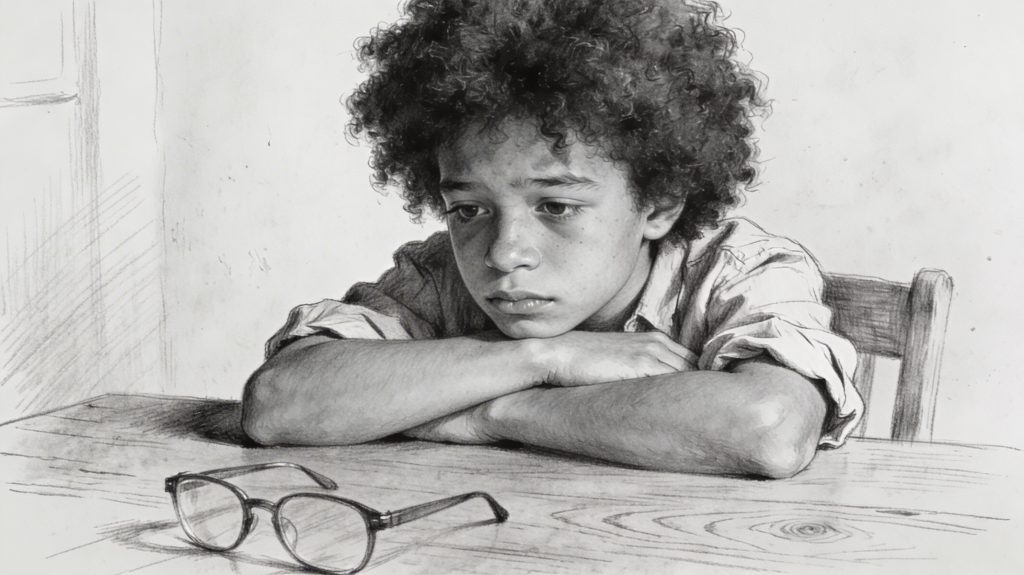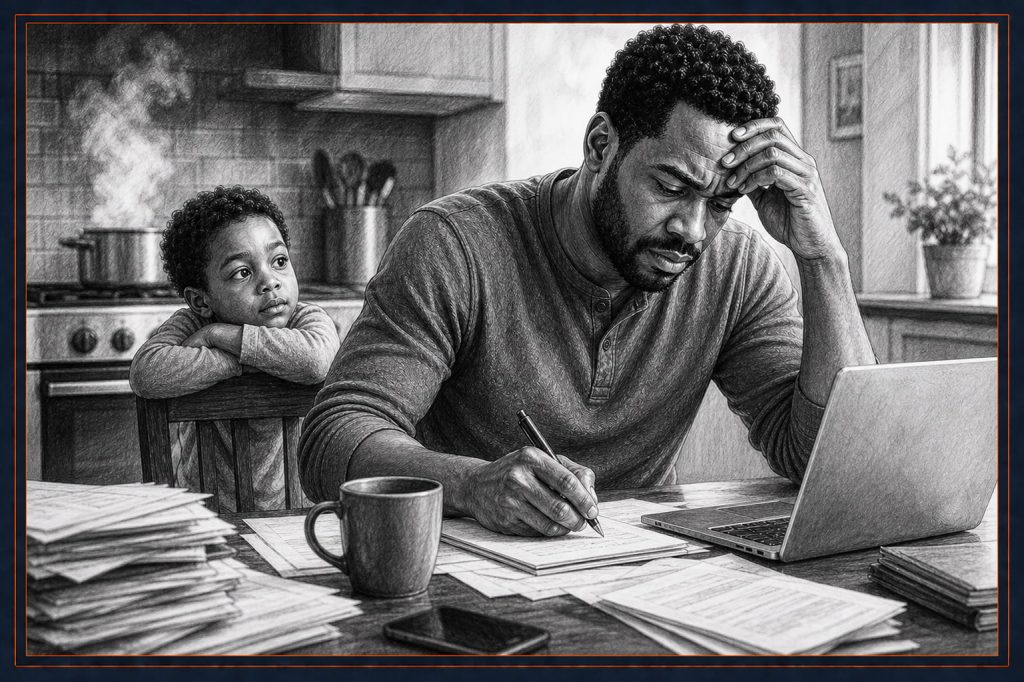
Children watch their parents not their advice. I want you to really sit with that sentence before we go any further. Because if it is true, and the research says it absolutely is, then it changes the entire frame of what parenting actually is.
We spend so much energy on the words. The speeches. The lessons at the dinner table. The carefully timed conversations about making good choices and treating people well and working hard. And our children hear roughly fifteen percent of it.
The other eighty-five percent? They get from watching us.
How we handle disappointment. How we talk about people who are not in the room. Whether we read or just scroll. Whether we keep our word when it is inconvenient. Whether the version of us that faces the world is the same version that lives at home.
Children watch their parents not their advice. Every single day. Without being asked to. Without even knowing they are doing it. And what they observe becomes the blueprint they build their lives on.
That is either a terrifying thought or a motivating one. Probably both. Let us do something useful with it. Because children watch their parents not their advice whether we are ready for that or not.

The Story of Grace and Her Art Class
At 52, Grace enrolled in her first art class.
She was, by her own admission, spectacularly terrible at it. She brought home paintings that her adult children hung on their fridges with a very specific combination of love and barely concealed amusement. One of them was allegedly a bowl of fruit. The jury is still out on that.
But something happened while Grace was busy being bad at painting.
Her daughter, who had been quietly terrified of changing careers for three years, quit her job and went back to study. Her son, who had been telling himself he could not run, signed up for a 5km race. Her youngest started learning guitar after years of saying she was not musical.
Grace did not give anyone a lecture about courage. She did not sit her adult children down and tell them it was okay to try new things. She just started painting badly and kept going anyway. Children watch their parents not their advice and Grace gave them something worth watching.
And they watched. And they moved.
That is what it looks like when children watch their parents not their advice. Not the speeches. The life being lived. And Grace's life said: it is never too late, being bad at something is survivable, and the attempt is what counts.
Her children heard that message more clearly than any conversation could have delivered it.
5 Powerful Truths About What Happens When Children Watch Their Parents
Truth One
They Are Learning How to Handle Hard Things
Every time something goes wrong in your life, your child is watching how you respond to it. Not listening to what you say about it. Watching how you actually handle it.
Do you catastrophise or do you problem solve? Do you blame everyone else or do you take stock of your part? Do you fall apart and stay there or do you fall apart and get back up? Children watch their parents not their advice on exactly this question.
Because whatever you do, consistently, under pressure, is what your child is filing away as the correct way to handle hard things. That is the manual they are building. And they will open it the first time life gets difficult for them and look for the page that covers this situation.
Children watch their parents not their advice when it comes to resilience. You can tell them until you are blue in the face that setbacks are survivable and growth comes from difficulty. Or you can show them by getting back up every time. The second one works. The first one is just words.
Truth Two
They Are Learning What Relationships Look Like From the Inside
Your child is building their template for adult relationships by watching yours. Not from romantic films. Not from what their friends tell them. From you and the people you love and how you treat each other when nobody is performing.
Do the adults in your home speak to each other with respect even during disagreements? Do people apologise when they get something wrong? Is kindness the default or is it something that gets deployed for special occasions?
Your child is going to walk into their own relationships one day carrying whatever they absorbed from yours. The good stuff and the complicated stuff. Both travel. Because children watch their parents not their advice and they store everything they see.
Children watch their parents not their advice on this one more than almost anything else. You can tell your daughter to find a partner who respects her. But what she will actually look for is something that feels familiar. Make sure familiar feels like something worth finding again.
Truth Three
They Are Learning Whether Kindness Is Real or Performative
Here is a test worth trying. How do you treat people who cannot do anything for you?
The waiter who gets your order wrong. The driver who cuts you off. The colleague who irritates you. The neighbour you have never particularly liked. The checkout person at the end of a long shift.
Your child is watching all of that. And they are clocking the gap, if there is one, between the warm generous person you are when it matters and the impatient frustrated person you are when you think nobody important is looking.
Children watch their parents not their advice when it comes to kindness. They notice when the values you talk about at the table show up in how you live, and they notice when they do not. And they draw very specific conclusions from both observations about what you actually believe versus what you just say.
Be kind to the waiter. Not for the waiter. For your child who is watching from the other side of the table. Children watch their parents not their advice and the waiter test is one they never forget.
Truth Four
They Are Learning Whether It Is Okay to Keep Growing
This is the Grace truth. The one that catches people off guard.
When your child watches you pursue something, learn something, try something new, be bad at something and keep going anyway, they receive a message that no lecture could deliver.
Growth does not stop. Curiosity does not have a retirement age. The attempt is always worth making even when the result is questionable at best.
Parents who keep learning, who have interests beyond their parenting role, who read and question and change their minds and try new things, raise children who believe the same is possible for them. Because they watched it happening in real time.
Children watch their parents not their advice on this one deeply. A parent who stopped growing the day their child arrived is modelling something. A parent who keeps growing alongside their child is modelling something entirely different. Both things get absorbed.
Grace was not a great artist. She was never going to be. But her children got to watch a person decide that being bad at something was not a reason not to try. That is worth more than any pep talk.
Truth Five
They Are Learning What They Are Worth by Watching What You Prioritise
This one is the hardest one to read so I am going to say it plainly.
When your child watches you consistently prioritise other things over time with them, they draw a conclusion. Not a dramatic one. Not a conscious one. Just a quiet filing away of information about where they sit in the order of importance.
Now before anyone feels attacked, this is not about never being busy. You are allowed to be busy. You are allowed to have a life and a career and things that matter beyond your role as a parent. That is healthy and important for all sorts of reasons.
But your child is watching the overall pattern. And the overall pattern tells them something about their value to you that no individual conversation can fully overwrite.
Children watch their parents not their advice when it comes to feeling valued. You can tell your child they are the most important thing in your life. But if the pattern says otherwise, the pattern wins. Every time.
The good news is that patterns can change. And even one shift, noticed by your child, begins to rewrite the story.
Children who describe their parents as consistent role models are significantly more likely to report close relationships with those parents in adulthood and to seek their guidance during difficult life decisions.
Albert Bandura, Social Learning Theory, research on observational learning and parental modelling, Read more at Simply PsychologySo What Do You Actually Do With This?
Here is the practical bit. Because children watch their parents not their advice is a useful truth but only if it leads somewhere.
You do not have to be perfect. That is not what this is about. Your child watching you make mistakes and handle them well is just as valuable as watching you get things right. Maybe more valuable actually. Because they need to see that imperfection is survivable too.
What you do need is integrity between what you say and what you do. Not perfect alignment. Just enough that the gap is not glaring. Enough that your child does not spend their childhood trying to reconcile two very different versions of you. Children watch their parents not their advice and integrity is what makes what they watch worth seeing.
Ask yourself honestly: what is my child learning by watching me this week? Not what am I teaching them. What are they learning? Those are sometimes very different questions.
Then pick one thing. Just one. One area where the life you are living and the values you are talking about are not quite matching up. And close that gap a little. Not all at once. Just a little.
Children watch their parents not their advice every single day. Make it worth watching.
"Children have never been very good at listening to their elders, but they have never failed to imitate them."
James Baldwin, writer and activist, Goodreads
For more on the habits that keep parent and child relationships genuinely close, read our post on why your child stops talking to parents and what families who stay connected do differently. And for the research behind observational learning and child development, the American Psychological Association resources on children are worth bookmarking.
What has your child watched you do this week that you would want them to remember? And what have they watched that you would rather they forgot? The gap between those two answers is where the work is. Children watch their parents not their advice. Make sure what they are watching is something worth carrying into their own life.
Want practical tools to build a closer relationship with your child?
Visit our Resource Library for books and guides that help you build safety, presence, and lasting closeness with your child, one small step at a time. All yours, free.
Get the Free ResourcesFamily Journey Online — Raising Connected Families
www.familyjourneyonline.com