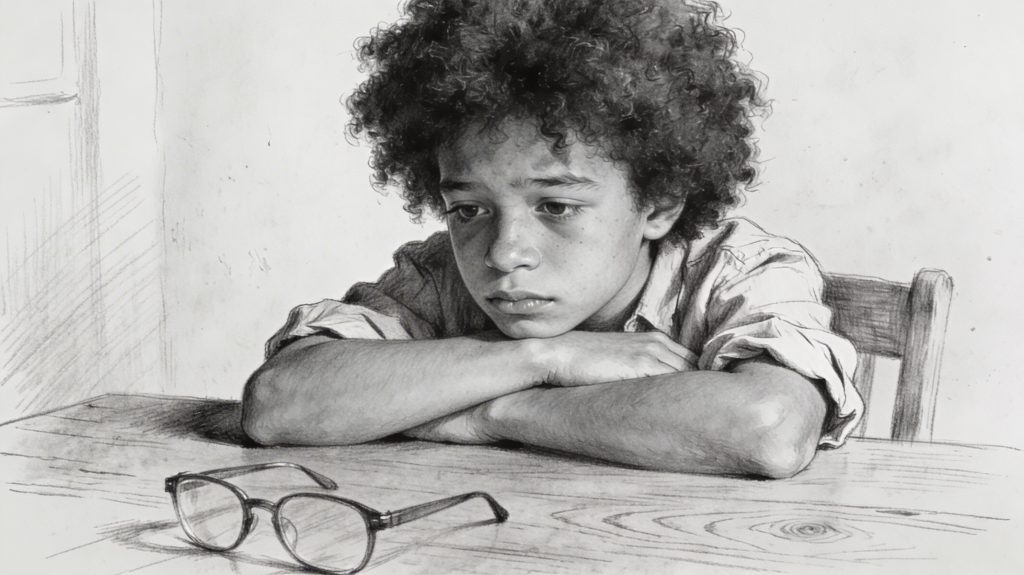
This is for the father of a daughter, of any age, who has ever wondered why she ran toward someone he never trusted. And for the mother carrying this alone.
A mother told me about her daughter recently. They are not speaking much these days, and the mother is more confused than angry, if I am honest about how it sounded. She cannot fully explain when it started or what exactly went wrong, only that her daughter has been pulling away, and a boy showed up around the same time everything started shifting.
The mother's read on it was simple. The boy got into her head. Said the right things at the right time, played it patient, and now her daughter cannot see him clearly.
Maybe. That does happen.
But I kept thinking about something else while she was talking. What was already going on before the boy arrived.
Because a new relationship does not usually create every crack by itself. More often, it steps into whatever is already there. If there is a gap, it can fill it. If there is a question nobody has answered well, it can answer it badly and still feel powerful. It may not create the opening. Sometimes it simply finds one.
And that is the question that actually matters here. Not just who is this boy. It is also what emotional space was already waiting to be filled before he ever showed up. Underneath all of it is something simpler than it first appears: how fathers shape what love feels like for their daughters, often without realising they are doing it at all.
"A father is often a daughter's first experience of being loved by a man. Long before she ever falls in love, she is already learning what love is supposed to feel like, from him."

Long before anyone else arrives, a daughter is already learning what love feels like from the first man in her life.
How Fathers Shape What Love Feels Like, Before Anyone Teaches Her Anything
A daughter does not learn what love feels like from a book, or a film, or a lecture. She learns it by living inside it. From a father who notices her without being asked. Who is proud of her for reasons that have nothing to do with what she has achieved. Who makes her feel important without making her perform for it.
That becomes a starting point. Not something she chooses consciously. It settles underneath everything else. This is what it feels like to be loved by a man who is not trying to get anything from me. This is what real attention feels like.
If that gets built early and built well, something useful happens later. When someone shows up who is inconsistent, manipulative, or emotionally confusing, she is more likely to feel the wrongness of it. Not because anyone gave her a speech. Because she already has a reference point for what safe love feels like.
That is one of the most important things a present father gives a daughter. Not a guarantee she will avoid every bad decision. A reference point. A felt sense of what good is supposed to feel like, so the bad stands out more clearly against it.
What Happens When That Reference Point Never Gets Built
A father who is absent, distracted, or emotionally hard to reach does not leave a blank space where that reference point should be. Something still gets built there. Just a different version of it, built from whatever was actually available to her instead.
Sometimes that version says love is something you have to perform for. Sometimes it says love comes and goes depending on someone's mood. Sometimes it says attention itself, no matter where it comes from or what it costs, is close enough to love that it will do.
None of this is really about blame. Most fathers who were distant did not mean for any of it to happen. Work happened. Life happened. Their own history happened. But children keep learning whether the lesson is intentional or not.
The Boyfriend Is Rarely the Whole Story
When a daughter suddenly seems wrapped up in someone new, pulling away from the people who raised her, and defending something everyone else can see is not good for her, the easy explanation is manipulation. And sometimes that is exactly what is happening. It is real and it deserves to be taken seriously.
But manipulation often works best where there is already emotional hunger, confusion, or an opening. A daughter who has spent her life feeling deeply seen and chosen by her father may still make mistakes, but she is often harder to win over with fake affection. She already knows what the real thing feels like.
A daughter who has spent years quietly wondering whether she is enough is in a different position. Constant attention, even attention with strings attached, can feel powerful to someone who has been thirsty for it. That does not make her foolish. It means an unmet need found an answer, even if it was the wrong one.
This is not a post telling you the boyfriend is fine and you are automatically the problem. Some relationships really are unhealthy and deserve real concern. But the question worth sitting with first is not only who this boy is. It is also what need he is meeting that has gone unmet for a long time.
What If There Is No Father in the Picture?
Some daughters grow up without a father at all. Not distant. Not hard to reach. Not absent on purpose. Just gone. Because of death. Divorce. Abandonment. Or circumstances that had nothing to do with the daughter's worth.
In those homes, the mother is often the only adult love in the picture. She may feel pressure to fill the father's role, or guilt that her daughter is missing something she cannot replace.
You cannot take the place of your daughter's father. But you can do something different and just as powerful.
You can help her name the void without making her feel broken for having it. You can remind her that she is valuable, safe, and worthy of love even when a man is not in her life. You can point her to other steady male figures, uncles, grandfathers, mentors, coaches, without trying to force them into the role yourself.
You can talk about love in a way that is honest, not defensive. Some men are not capable of giving love well. That is not your fault. It does not mean you are unlovable.
What heals most is not trying to become the father. It is being the mother who sees her daughter's pain, names it gently, and stays present without trying to fix it all at once.
If you are the mother in a home where there is no father, or where the father is emotionally absent, you do not have to carry the whole burden alone. You cannot replace the father. But you can help your daughter see that she is still loved, still valuable, and still worthy of safe love.
What This Looks Like in Ordinary Homes
It rarely looks dramatic. A father who works long hours, loves his daughter deeply, but mostly shows it through providing rather than being present with her. A father who is physically in the room but somewhere else entirely, checking his phone while she is trying to tell him something. A father who mostly engages when there is a problem to fix or a standard that has slipped, so his daughter learns that his attention comes through performance or crisis rather than ordinary closeness.
None of these fathers think of themselves as absent. Most would be hurt to hear it put that way. They are working hard. They love fiercely. But love that is never clearly felt does not build the same foundation as love that is.
What Builds That Foundation
Noticing her without being prompted. Asking about her inner world, not just her performance. Making eye contact when she talks instead of half listening. Telling her specifically what you admire about who she is, not only what she does. Apologising when you get it wrong. Letting her watch how you treat her mother, or any woman in your life, because she is always watching that too.
What Quietly Wears It Down
Distraction during the moments that matter to her. Affection that mostly shows up around achievement. Going quiet during her hard moments because you do not know what to say. Comparing her to other people. Letting work or stress consistently come before her in ways she notices, even if she never says anything about it.
Research on father involvement consistently links engaged fathering with better emotional and developmental outcomes for children, including daughters' well-being and relationship patterns later in life.
See resources from the American Psychological Association
It is never too late to become a safer reference point than the one she has been carrying.
It Is Not Too Late, Whatever Her Age Is Now
If your daughter is already grown, already in a relationship that worries you, or already harder to reach than she used to be, do not let this become one more reason to drown in regret. That feeling does not help either of you.
A father can still become a felt presence in his daughter's life at any stage. It does not require one dramatic conversation or a list of confessions. It requires showing up differently now. Calling not only to check on the relationship, but to ask how she really is. Noticing things about her that have nothing to do with whether you approve of every decision. Letting her feel, through consistency more than speeches, that your love is real and reachable.
If you are the mother in a home where there is no father, or where the father is emotionally absent, you do not have to carry the whole burden alone. You cannot replace the father. But you can help your daughter see that she is still loved, still valuable, and still worthy of safe love.
That reference point can still be rebuilt, even later than you wish it had started. It takes patience and consistency over performance. But it is available to nearly any father willing to do the work.
"The most important thing a father can do for his children is to love their mother."
Theodore Hesburgh, via Goodreads
For more on building the kind of presence your child remembers, read our post on why good fathers lose connection with their children. You can also explore broader parenting guidance from the American Psychological Association.
If your daughter had to describe, in one sentence, what it feels like to be loved by you, what would she actually say? Sit with the honest answer, not the one you wish were true. That answer is exactly where the work begins.
Frequently Asked Questions About How Fathers Shape Daughters Love
How does a father shape his daughter's future relationships?
A father is often a daughter's earliest reference point for what love, attention, and emotional safety from a man can feel like. That early experience can influence the standards she carries into later relationships.
Why do daughters sometimes choose partners their parents disapprove of?
Often this is less about the specific partner alone and more about an unmet need being addressed, even by the wrong person. Understanding the underlying need is often more useful than focusing only on the partner.
Is it too late for a father to repair his relationship with his adult daughter?
It is rarely too late. Daughters of any age often respond to genuine, consistent change in how a father shows up, especially when that change is warm, patient, and real.
What can a father do today to build a stronger bond with his daughter?
Start small and stay consistent. Notice her without being prompted. Ask about her inner world. Put the phone down when she speaks. Apologise sincerely when you miss it. These repeated actions build trust far more effectively than occasional big gestures.
How can a mother help her daughter when there is no father in the picture?
Start by helping her name the gap without shaming her for it. Let her know that missing a father is painful, but it does not mean she is broken. Look for other healthy male figures in her life, uncles, grandfathers, mentors, coaches, and support those relationships. Most importantly, be the adult who stays emotionally present, consistent, and honest about love, even when it is hard.
Want practical tools to build a closer relationship with your child?
Visit our Resource Library for books and guides that help you build safety, presence, and lasting closeness with your child, one small step at a time. All yours, free.
Get the Free ResourcesFamily Journey Online — Raising Connected Families